


|
INFINITY COURSE
Must Read (Old & New) NCERTs for IAS Preparation for UPSC217,880 students learning this week · Last updated on Oct 12, 2025 |
Must Read (Old & New) NCERTs Study Material

Trending Courses for UPSC
Old & New NCERTs for IAS Preparation (Must Read) for UPSC Exam Pattern 2025-2026
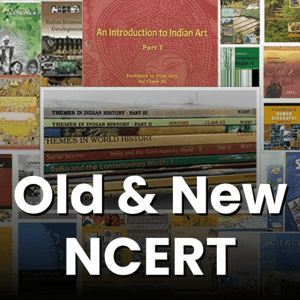
Old & New NCERTs for IAS Preparation (Must Read)
Exam Pattern for UPSC:
- The UPSC (Union Public Service Commission) conducts the Civil Services Examination (CSE) for the recruitment of candidates into the prestigious Indian Administrative Service (IAS), Indian Foreign Service (IFS), and other central services.
- The exam consists of three stages: the Preliminary Exam (Objective type), the Main Exam (Descriptive type), and the Personality Test (Interview).
- The Preliminary Exam consists of two papers: General Studies Paper I and General Studies Paper II (CSAT). Both papers are of 200 marks each.
- The Main Exam consists of nine papers, including an Essay paper, four General Studies papers, two Optional papers, and two Language papers.
- The Personality Test is conducted for candidates who qualify the Main Exam.
- The syllabus for the exam covers a wide range of subjects, including history, geography, polity, economy, science and technology, environment, and current affairs.
Importance of NCERTs:
- NCERT (National Council of Educational Research and Training) textbooks are considered the foundation for UPSC preparation.
- The content in NCERT books is well-structured, concise, and provides a comprehensive understanding of various subjects.
- NCERT books cover the basics and provide a strong conceptual base, which is crucial for answering UPSC questions.
- The language used in NCERT books is simple and easy to understand, making it suitable for aspirants with different backgrounds.
- UPSC often asks questions directly from NCERT books, especially in the Preliminary Exam.
- NCERT books help in building a solid foundation and can be used as a reference for advanced studies.
Old NCERTs:
- Old NCERT books, published before the 2005 syllabus change, are still relevant for UPSC preparation.
- While the factual information might be outdated, the conceptual understanding provided in these books remains valuable.
- Old NCERTs are particularly useful for subjects like history, where the understanding of concepts and events is more important than the latest facts and figures.
- Aspirants should refer to old NCERT books for topics like ancient and medieval history, which have seen minimal changes over the years.
New NCERTs:
- New NCERT books, published after the 2005 syllabus change, are essential for staying updated with the current education system and curriculum.
- New NCERTs cover recent developments, changes, and advancements in various subjects, making them relevant for UPSC preparation.
- These books are particularly useful for subjects like geography, polity, economy, and science and technology, where the latest information and concepts are crucial for answering UPSC questions.
- Aspirants should refer to new NCERT books for topics like modern Indian history, geography, and current affairs.
Tips for Using NCERTs:
- Start with the basics: Begin your UPSC preparation by thoroughly studying the NCERT books. This will help you build a strong foundation.
- Read selectively: While NCERT books are important, you don't need to read every page. Focus on understanding the concepts and main ideas.
- Make notes: Take notes while reading NCERT books. This will help you revise and retain the information effectively.
- Use NCERTs as a reference: Even after moving on to advanced study materials, keep referring back to NCERT books for a quick revision or clarification of concepts.
- Practice questions: Solve the exercise questions given at the end of each chapter in NCERT books. This will enhance your understanding and improve your problem-solving skills.
In conclusion, NCERT books, both old and new, are essential for IAS preparation. They provide a solid foundation, cover a wide range of subjects, and are often directly asked in the UPSC exams. Aspirants should make effective use of these books by understanding the exam pattern, focusing on key topics, and using them as a reference throughout their preparation journey.


Old & New NCERTs for IAS Preparation (Must Read) Syllabus 2025-2026 PDF Download
1. History
- Ancient India: UPSC RS Sharma for Ancient India (Old NCERT)
- Medieval India: UPSC Satish Chandra for Medieval India (Old NCERT)
- Modern India: UPSC Bipan Chandra for Modern India (Old NCERT)
- Tamil Nadu History: Class 11 & 12 textbooks
- UPSC History Textbooks: Class 12 (Theme 1, 2, 3)
2. Art and Culture
- An Introduction to Indian Art: Class 11 NCERT
- Living Crafts Traditions of India: Class 11 NCERT
- Crafts Tradition of India: Class 12 NCERT
3. Polity and Governance
- Indian constitution at work: Class 11 NCERT
- Politics in India since Independence: Class 12 NCERT
4. Economics
- Understanding Economic Development: Class 10 NCERT
- Indian Economic development: Class 11 NCERT
- Introductory Macroeconomics: Class 12 NCERT
- Introductory Microeconomics: Class 12 NCERT
5. Geography
- Fundamentals of Physical Geography: Class 11 Geography
- India – Physical Environment: Class 11 Geography
- Fundamentals of Human Geography: Class 12 Geography
- India – People and Economy: Class 12 Geography
6. Sociology
- Introducing Sociology: Class 11 NCERT Sociology
- Understanding Sociology: Class 11 NCERT Sociology
- Indian Society: Class 12 NCERT Sociology
- Social Change and Development in India: Class 12 NCERT Sociology
Please note that the above mentioned syllabus includes both old and new NCERT textbooks that are recommended for UPSC preparation. It is important to thoroughly study these textbooks as they cover a wide range of topics and concepts that are relevant for the UPSC examination.
This course is helpful for the following exams: UPSC, BPSC (Bihar), UPPSC (UP), HPSC (Haryana), RPSC RAS (Rajasthan), MPPSC (Madhya Pradesh), WBCS (West Bengal), APPSC (Andhra Pradesh), KPSC KAS (Karnataka), CGPSC (Chhattisgarh), MPSC (Maharastra), OPSC OCS (Odisha), JPSC (Jharkhand), TNPSC (Tamil Nadu), TSPSC (Telangana), HPPSC HPAS (Himachal Pardesh), GPSC (Gujarat), PPSC PCS (Punjab), JKPSC KAS (Jammu and Kashmir), Kerala PSC KAS , Manipur CSCCE , UKPSC (Uttarakhand), APPSC (Arunachal Pradesh), APSC CCE (Assam), GPSC (Goa), MPSC MCS (Mizoram), NPSC (Nagaland), SPSC (Sikkim), TPSC TCS (Tripura)
How to Prepare Old & New NCERTs for IAS Preparation (Must Read) for UPSC?
How to Prepare Old & New NCERTs for IAS Preparation (Must Read) for UPSC?
Preparing for the UPSC exam requires a well-planned study strategy, and one of the most important resources for IAS preparation is the NCERT textbooks. The NCERTs are recommended by experts as they provide a solid foundation for understanding various subjects and concepts. In this article, we will discuss how to effectively prepare the old and new NCERTs for IAS preparation.
Why are NCERTs important for IAS preparation?
1. Clear Concepts: NCERT textbooks are known for their simplified language and logical explanations. They provide a comprehensive understanding of various topics, making it easier for aspirants to grasp the concepts.
2. Relevance: The content covered in the NCERT books is aligned with the UPSC syllabus. Hence, studying the NCERTs ensures that you have covered all the relevant topics required for the exam.
3. Foundation Building: The NCERT textbooks lay the foundation for advanced topics. They help in building a strong base, which is crucial for understanding complex subjects in the future.
How to effectively prepare the old and new NCERTs for IAS preparation?
1. Identify the Relevant NCERTs: Start by identifying the NCERT textbooks that are relevant to the UPSC syllabus. Make a list of the subjects and topics that need to be covered.
2. Read and Understand: Read the NCERT textbooks thoroughly and try to understand the concepts. Take notes while studying to aid in revision later.
3. Highlight Key Points: Use different colored highlighters to mark important points, definitions, and examples in the NCERTs. This will help you revise and recall the information easily.
4. Make Short Notes: While studying the NCERTs, make concise and well-organized notes. Summarize the main points and create mind maps or flowcharts to aid in retention.
5. Practice Questions: Solve the exercise questions provided at the end of each chapter in the NCERT textbooks. This will help you gauge your understanding of the concepts and improve your problem-solving skills.
6. Refer to Previous Year Question Papers: While studying the NCERTs, refer to the previous year's question papers to get an idea of the type of questions asked in the UPSC exam. This will help you align your preparation accordingly.
7. Revise Regularly: Regular revision is key to retaining the information. Set aside dedicated time for revision and go through your notes and highlighted portions of the NCERT textbooks frequently.
8. Supplement with Current Affairs: While the NCERTs provide a strong foundation, it is essential to stay updated with current affairs. Read newspapers, magazines, and online sources to enhance your knowledge on current events.
By following these steps, you can effectively prepare the old and new NCERTs for IAS preparation. Remember to stay consistent, dedicated, and focused throughout your preparation journey. Good luck!
Importance of Old & New NCERTs for IAS Preparation (Must Read) for UPSC
Preparing for the UPSC examination requires a comprehensive and well-rounded approach to cover all the topics and concepts. One of the most crucial resources for IAS preparation is the NCERT textbooks, both the old and new editions. These books are highly recommended by experts and toppers for a variety of reasons. Let's explore the importance of incorporating both the old and new NCERTs in your UPSC preparation.
1. Strong Foundation:
The old NCERT textbooks provide a strong foundation in various subjects. These books were written by eminent authors and scholars, ensuring in-depth coverage of fundamental concepts. They form the building blocks of knowledge and understanding, which are essential for the IAS exam. By referring to the old NCERTs, candidates can strengthen their basics and develop a solid foundation in subjects like History, Geography, and Science.
2. Historical Perspective:
The old NCERT textbooks offer a historical perspective on various subjects. They provide insights into the evolution of ideas, events, and societies, which is crucial for understanding the present-day scenario. The IAS exam often includes questions that require an understanding of historical context. By studying the old NCERTs, candidates can develop a historical perspective and enhance their analytical skills.
3. Updated Information:
While the old NCERT textbooks provide a strong foundation, it is equally important to stay updated with the latest information. The new NCERT textbooks encompass the recent developments, changes, and advancements in various fields. These books cover the latest syllabus prescribed by the UPSC and provide updated information on subjects like Economics, Science, and Polity. Incorporating the new NCERTs in your preparation ensures that you are well-versed with the latest knowledge and current affairs.
4. Syllabus Alignment:
The UPSC syllabus undergoes periodic revisions to reflect the changing dynamics of the nation and the world. The new NCERT textbooks are designed keeping these changes in mind and align with the updated syllabus. By referring to the new NCERTs, candidates can ensure that their preparation is aligned with the current syllabus. This helps in focusing on the relevant topics and concepts, saving time and effort.
5. Comprehensive Coverage:
The combination of old and new NCERT textbooks offers a comprehensive coverage of the UPSC syllabus. While the old NCERTs provide a strong foundation, the new NCERTs offer updated information and align with the current syllabus. By studying both editions, candidates can ensure that they have covered all the necessary topics and concepts required for the IAS exam. This comprehensive approach enhances their chances of scoring well in the examination.
In conclusion, incorporating both the old and new NCERT textbooks in your IAS preparation is essential for building a strong foundation, developing a historical perspective, staying updated with the latest information, aligning with the syllabus, and ensuring comprehensive coverage. By enrolling in the "Old & New NCERTs for IAS Preparation (Must Read)" course offered by EduRev, candidates can access high-quality study materials, expert guidance, and practice questions to enhance their UPSC preparation.
Old & New NCERTs for IAS Preparation (Must Read) for UPSC FAQs
| 1. What are Old and New NCERTs? |  |
| 2. Why are Old and New NCERTs important for IAS preparation? | |
| 3. How can Old and New NCERTs be used effectively for IAS preparation? | |
| 4. Are Old NCERTs still relevant for IAS preparation? | |
| 5. Can I rely solely on NCERT textbooks for IAS preparation? | |
Best Coaching for Old & New NCERTs for IAS Preparation (Must Read) for UPSC
Tags related with Old & New NCERTs for IAS Preparation (Must Read) for UPSC

|
View your Course Analysis |

|

|
Create your own Test |
|



|
|



|
Explore Courses for UPSC exam
|

|
Course Speciality


Must Read (Old & New) NCERTs for IAS Preparation for UPSC Books
Must Read (Old & New) NCERTs for IAS Preparation for UPSC Notes PDF Download
Must Read (Old & New) NCERTs for IAS Preparation for UPSC Previous Year Papers
Important Questions for Must Read (Old & New) NCERTs for IAS Preparation for UPSC
|
© EduRev
|
Education Revolution
|


|







within 7 days!