


All Exams >
UPSC >
Old & New NCERTs for IAS Preparation (Must Read) >
All Questions
All questions of Class 8 for UPSC CSE Exam
Which of the following tools would a farmer use to remove weeds from the field?
- a)Hoe
- b)Axe
- c)Plough
- d)Cultivator
Correct answer is option 'A'. Can you explain this answer?
Which of the following tools would a farmer use to remove weeds from the field?
a)
Hoe
b)
Axe
c)
Plough
d)
Cultivator

|
Aditya Shah answered |
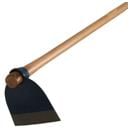
Option A: Hoe is used to remove weeds and to loosen the soil. Hoe works like a blade. Below is the image of Hoe.
Option B: Axe is used to cut the trees.
Option C: Plough is used for tilling the soil.
Option D: The cultivator is used for ploughing.
Option C: Plough is used for tilling the soil.
Option D: The cultivator is used for ploughing.
Thus, option A is correct.

Cutting mature crop manually or by a machine is called:
- a)Irrigating
- b)Harvesting
- c)Breeding
- d)Weeding
Correct answer is option 'B'. Can you explain this answer?
Cutting mature crop manually or by a machine is called:
a)
Irrigating
b)
Harvesting
c)
Breeding
d)
Weeding
|
|
Anita Menon answered |
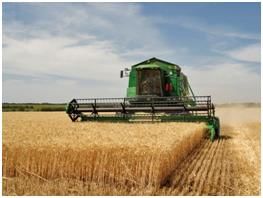
The process of cutting the mature crop manually or by machine is called harvesting. The crops are pulled out or cut close to the ground.
Gold : metal :: Silicon : _____a)non metalb)metalloidc)semi non metald)metalCorrect answer is option 'B'. Can you explain this answer?
|
|
Anita Menon answered |
Gold is metal and Silicon is a metalloid. Those elements that shows the property of both metal and non-metal are called metalloids.
From the following pick out, which is not the member of the solar system?a)A natural satelliteb)A cometc)An asteroidd)A constellationCorrect answer is option 'D'. Can you explain this answer?
|
|
Aditi Saxena answered |
A constellation is not the member of the solar system. These are the group of stars that forms a recognizable shape is known as Constellation.
Cotton and jute are the two common synthetic fibres.- a)True
- b)False
Correct answer is option 'B'. Can you explain this answer?
Cotton and jute are the two common synthetic fibres.
a)
True
b)
False
|
|
Amit Kumar answered |
"Cotton and jute” are the two common natural fibres not synthetic fibres.
The sun makes life possible by providing us with- a)Oxygen
- b)Water
- c)Heat and light
- d)Carbon dioxide
Correct answer is option 'C'. Can you explain this answer?
The sun makes life possible by providing us with
a)
Oxygen
b)
Water
c)
Heat and light
d)
Carbon dioxide
|
|
Anita Menon answered |
The Sun is the ultimate source of light and heat that support life. Life is possible on earth due to Sun. The energy required for all kinds of living organism come from Sun.
When non-metals react with water then - a)Hydrogen gas is formed
- b)Carbon dioxide gas is formed
- c)Non-metals do not react with water
- d)None of these.
Correct answer is option 'C'. Can you explain this answer?
When non-metals react with water then
a)
Hydrogen gas is formed
b)
Carbon dioxide gas is formed
c)
Non-metals do not react with water
d)
None of these.
|
|
Amita Verma answered |
Non-metals don't react with water but the non-metal oxides do react with water and they produce acids. One example is chlorine gas (chlorine oxide) reacts with clouds (water) to form acids which come down as acid rain.
The metal alloyed with gold for making jewellery :- a)copper
- b)zinc
- c)silver
- d)aluminium
Correct answer is option 'A'. Can you explain this answer?
The metal alloyed with gold for making jewellery :
a)
copper
b)
zinc
c)
silver
d)
aluminium

|
Sanjana Bose answered |
Copper alloys are metal alloys that have copper as their principal component. They have high resistance against corrosion. The best known traditional types are bronze, where tin is a significant addition, and brass, using zinc instead.
Can you explain the answer of this question below:Metals are solid except :
- A:
mercury
- B:
gallium
- C:
sodium
- D:
iodine
The answer is A.
Metals are solid except :
mercury
gallium
sodium
iodine

|
Madhurima Nair answered |
All metals are found in solid state at normal room temperature except mercury, which is liquid at room temperature.
Which of the following microorganism promotes the formation of curd?- a)Lactobacillus
- b)Amoeba
- c)Spiral bacteria
- d)Spirogyra
Correct answer is option 'A'. Can you explain this answer?
Which of the following microorganism promotes the formation of curd?
a)
Lactobacillus
b)
Amoeba
c)
Spiral bacteria
d)
Spirogyra
|
|
Amit Sharma answered |
Lactobacilli are the bacteria which are naturally present in the milk that convert the sugar(lactose) into lactic acid through the process of fermentation and that is seen in the form of curd.
Coke contains approximately _____ carbon.
- a)98 percent
- b)95 percent
- c)90 percent
- d)99 percent
Correct answer is option 'D'. Can you explain this answer?
Coke contains approximately _____ carbon.
a)
98 percent
b)
95 percent
c)
90 percent
d)
99 percent
|
|
Ananya Das answered |
Coke is obtained from destructive distillation of coal. Coke contains approximately 99% carbon. It is used in blast furnace.
Sound is produced by- a)Heating
- b)Moving
- c)Cooling
- d)Vibration
Correct answer is option 'D'. Can you explain this answer?
Sound is produced by
a)
Heating
b)
Moving
c)
Cooling
d)
Vibration

|
Dhruv Gupta answered |
Sound is produced by vibration of object. Vibration creates disturbance in medium which reaches to observer ear through air, water or solid medium.
The property by which metals can be beaten into sheets is known as ___- a)Ductility
- b)Lusture
- c)Sonority
- d)Malleability
Correct answer is option 'D'. Can you explain this answer?
The property by which metals can be beaten into sheets is known as ___
a)
Ductility
b)
Lusture
c)
Sonority
d)
Malleability

|
Shubham Sharma answered |
Malleability is a physical property of metals that defines their ability to be hammered, pressed, or rolled into thin sheets without breaking. In other words, it is the property of a metal to deform under compression and take on a new shape.
Millions of stars together form- a)Solar system
- b)Galaxy
- c)Constellation
- d)Comet
Correct answer is option 'B'. Can you explain this answer?
Millions of stars together form
a)
Solar system
b)
Galaxy
c)
Constellation
d)
Comet
|
|
Sarita Verma answered |
A Globular cluster will contain between 10,000 to several million stars. An Open cluster will contain less than a few hundred stars. A Dwarf galaxy will contain several billion stars. A Galaxy will contain tens of billions of stars.
Metalloids are also known as :- a)minerals
- b)semi metals
- c)impure metals
- d)alloys
Correct answer is option 'B'. Can you explain this answer?
Metalloids are also known as :
a)
minerals
b)
semi metals
c)
impure metals
d)
alloys

|
Ashwin Jain answered |
Metalloids, also known as semimetals are elements containing properties similar and midway between metals and nonmetals. They are found to divide the periodic table between the metals on the left and the nonmetals on the right. Metalloids often have the following properties: could be dull or shiny.
In ancient cultures, process of separating grains from chaff is :- a)Buffering
- b)Harvesting
- c)Wind Winnowing
- d)None of these
Correct answer is option 'C'. Can you explain this answer?
In ancient cultures, process of separating grains from chaff is :
a)
Buffering
b)
Harvesting
c)
Wind Winnowing
d)
None of these

|
Akshita Bose answered |
Wind winnowing is an agricultural method developed by ancient cultures for separating grain from chaff. It is also used to remove hay and chaff or other pests from stored grain.
First fully synthetic fibre formed without natural material is:
- a)Nylon
- b)Acrylon
- c)Rayon
- d)Polyester
Correct answer is option 'A'. Can you explain this answer?
First fully synthetic fibre formed without natural material is:
a)
Nylon
b)
Acrylon
c)
Rayon
d)
Polyester

|
Isha Dey answered |
Nylon
Nylon is another man-made fibre. In 1931, it was made without using any natural raw material (from plant or animal). It was prepared from coal, water and air. It was the first fully synthetic fibre.
The brightest object in clear night sky is- a)Venus
- b)Sun
- c)Moon
- d)Star
Correct answer is option 'C'. Can you explain this answer?
The brightest object in clear night sky is
a)
Venus
b)
Sun
c)
Moon
d)
Star

|
Ritu Joshi answered |
The answer is a.
Venus is one of the brightest objects in the night sky. Venus is so bright because its thick clouds reflect most of the sunlight that reaches it (about 70%) back into space, and because it is the closest planet to Earth.
Venus is one of the brightest objects in the night sky. Venus is so bright because its thick clouds reflect most of the sunlight that reaches it (about 70%) back into space, and because it is the closest planet to Earth.
Any plant cultivated at a large stretch of land is called :- a)crop
- b)weed
- c)cereal
- d)fibre
Correct answer is option 'A'. Can you explain this answer?
Any plant cultivated at a large stretch of land is called :
a)
crop
b)
weed
c)
cereal
d)
fibre

|
Rohini Seth answered |
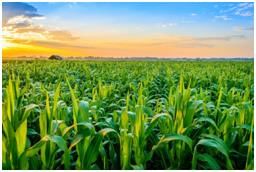
When plants of the same kind are grown and cultivated in one place on large scale, it is called a crop.
Example: Crop of wheat, crop of rice, etc.
Example: Crop of wheat, crop of rice, etc.
Which of the following disease is spread due to bacteria?- a)Measles
- b)Tuberculosis
- c)Chicken pox
- d)Polio
Correct answer is option 'B'. Can you explain this answer?
Which of the following disease is spread due to bacteria?
a)
Measles
b)
Tuberculosis
c)
Chicken pox
d)
Polio
|
|
Bhargavi Dasgupta answered |
Explanation:
Tuberculosis:
- Tuberculosis is a disease caused by the bacterium Mycobacterium tuberculosis.
- It primarily affects the lungs but can also affect other parts of the body.
- The disease is spread through the air when an infected person coughs or sneezes, releasing bacteria into the air.
- People nearby can then breathe in these bacteria and become infected.
- Tuberculosis is a highly contagious disease, especially in crowded or poorly ventilated environments.
- Symptoms of tuberculosis include coughing, chest pain, weight loss, fatigue, and fever.
- Treatment usually involves a combination of antibiotics taken over several months to kill the bacteria in the body.
- Without treatment, tuberculosis can be deadly, but with proper medical intervention, most people can be cured.
Therefore, tuberculosis is the correct answer as it is a disease spread due to bacteria.
Which planets have huge red spot- a)Earth
- b)Venus
- c)Mars
- d)Jupiter
Correct answer is option 'D'. Can you explain this answer?
Which planets have huge red spot
a)
Earth
b)
Venus
c)
Mars
d)
Jupiter

|
Sounak Sengupta answered |
Great Red Spot on Jupiter. The Great Red Spot is a persistent anticyclonic storm on the planet Jupiter, 22 degrees south of the equator, which has lasted at least 340 years. The storm is large enough to be visible through Earth-based telescopes.
Microorganisms can be seen with naked eyes.- a)True
- b)False
Correct answer is option 'B'. Can you explain this answer?
Microorganisms can be seen with naked eyes.
a)
True
b)
False

|
Geetika Shah answered |
B is the correct option.Microbes are minute, unicellular organisms that are invisible to the naked eye. They are also known as microorganisms or microscopic organisms as they could only be seen under a microscope or magnifying glass.
What is the name of object through which light can pass?- a)Opaque
- b)Translucent
- c)Transparent
- d)Luminous
Correct answer is option 'C'. Can you explain this answer?
What is the name of object through which light can pass?
a)
Opaque
b)
Translucent
c)
Transparent
d)
Luminous

|
Sanaya Shah answered |
The object through which light can pass easily is called transparent object. Glass, water and thin plastic sheets are transparent object.
SI unit of the calorific value of a fuel is :-a) KJ/kgb) KW/kgc) N/kgd) KJ/gCorrect answer is option 'A'. Can you explain this answer?
|
|
Rohit Sharma answered |
Calorific value provides the amount of energy that is released when a fuel or material undergoes the process of combustion.
It is usually a measure of energy.
The SI unit (international system of units) of calorific value is Joule/Kg or Kilo Joule/Kg.
In asexual reproduction- a)No parents are involved
- b)Four parents are involved
- c)One parent is involved
- d)Two parents are involved
Correct answer is option 'C'. Can you explain this answer?
In asexual reproduction
a)
No parents are involved
b)
Four parents are involved
c)
One parent is involved
d)
Two parents are involved
|
|
Disha Dey answered |
In asexual reproduction only one parent is involved. The new organism is identical to parent. No gametes formation takes place in asexual reproduction.
The process of conversion of sugar into alcohol is called- a)Infection
- b)Moulding
- c)Nitrogen fixation
- d)Fermentation
Correct answer is option 'D'. Can you explain this answer?
The process of conversion of sugar into alcohol is called
a)
Infection
b)
Moulding
c)
Nitrogen fixation
d)
Fermentation
|
|
Aditi Saxena answered |
The process of converting of sugar into alcohol is called fermentation. Ethanol Fermentation, also called Alcoholic Fermentation, is a biological process which converts sugars such as glucose, fructose and sucrose into cellular energy, producing ethanol and carbon dioxide as a side effect. As yeast performs this conversion in the absence of oxygen, alcoholic fermentation is considered an anaerobic process.
Ethanol fermentation has many uses, including the production of alcoholic beverages, the production of ethanol fuel, and bread baking.
Wine is produced by fermentation of the natural sugars present in grapes. Cider and perry are produced by similar fermentation of natural sugars in apples and pears respectively. Beer, Whiskey and vodka are produced by fermentation of grain starches that have been converted to sugar by the enzyme amylase, which is present in grain kernels that have been malted. Rum and some other beverages are produced by fermentation and distillation of sugarcane.
Which of the following metals can be cut with a knife?- a)Aluminium
- b)Copper
- c)Sodium
- d)Calcium
Correct answer is option 'C'. Can you explain this answer?
Which of the following metals can be cut with a knife?
a)
Aluminium
b)
Copper
c)
Sodium
d)
Calcium
|
|
Kavya Saxena answered |
Metals like sodium and potassium are soft and can be cut with a knife.
Microorganisms are :- a)saprophytes
- b)autotrophs
- c)autotrophs & heterotrophs
- d)hetrotrophs
Correct answer is option 'C'. Can you explain this answer?
Microorganisms are :
a)
saprophytes
b)
autotrophs
c)
autotrophs & heterotrophs
d)
hetrotrophs
|
|
Kavya Saxena answered |
Microorganisms are either autotrophs that prepare their own food or heterotrophs that obtain their food from other organism. Autotrophic microbes includes unicellular algae, while most of bacteria and virus are heterotrophic.
There are__ __ pairs of chromosome in human cell. - a)23
- b)46
- c)22
- d)All are wrong
Correct answer is option 'A'. Can you explain this answer?
There are__ __ pairs of chromosome in human cell.
a)
23
b)
46
c)
22
d)
All are wrong

|
Subset Academy answered |
In human cells, there are 23 pairs of chromosomes. Here's a concise explanation:
- Humans typically have 23 pairs of chromosomes, totaling 46 chromosomes.
- Each parent contributes one set of 23 chromosomes, including one sex chromosome pair.
- Chromosomes contain genetic material that carries information crucial for traits and functions.
- This chromosomal arrangement is essential for genetic diversity and proper cell function in humans.
- Humans typically have 23 pairs of chromosomes, totaling 46 chromosomes.
- Each parent contributes one set of 23 chromosomes, including one sex chromosome pair.
- Chromosomes contain genetic material that carries information crucial for traits and functions.
- This chromosomal arrangement is essential for genetic diversity and proper cell function in humans.
The strongest fibre is called:- a)rayon
- b)nylon
- c)acrylic
- d)none of these.
Correct answer is 'B'. Can you explain this answer?
The strongest fibre is called:
a)
rayon
b)
nylon
c)
acrylic
d)
none of these.

|
Nandini Sengupta answered |
Explanation:
Fibres are materials that are used to make fabrics and textiles. They can be natural or synthetic. Natural fibres are derived from plants or animals, while synthetic fibres are made from chemicals. Fibres can have different properties, such as strength, elasticity, and durability.
What is the strongest fibre?
The strongest fibre is considered to be nylon. Nylon is a synthetic fibre that was first developed in the 1930s by a team of scientists at DuPont. It is made from a polymer, which is a long chain of repeating molecules. Nylon has several properties that make it a strong fibre:
- Strength: Nylon is a very strong fibre, with a tensile strength of about 75,000 psi. This means that it can withstand a lot of force or weight without breaking.
- Durability: Nylon is also very durable, which means that it can last a long time without wearing out or breaking down.
- Resistance: Nylon is resistant to many chemicals, including oils, solvents, and alkalis. This makes it a good choice for applications where it will be exposed to harsh environments.
Other strong fibres:
While nylon is considered to be the strongest fibre, there are other fibres that are also very strong. These include:
- Kevlar: Kevlar is a synthetic fibre that is used in body armor, helmets, and other protective gear. It is five times stronger than steel and is very lightweight.
- Carbon fiber: Carbon fiber is a synthetic fibre that is used in aerospace and other high-performance applications. It is very strong and lightweight, and has a tensile strength of about 500,000 psi.
- Spider silk: Spider silk is a natural fibre that is produced by spiders. It is very strong and elastic, and is used by spiders to build webs and catch prey.
Conclusion:
In conclusion, nylon is the strongest fibre due to its high strength, durability, and resistance to chemicals. However, there are other strong fibres such as Kevlar, carbon fiber, and spider silk that are also used in various applications.
Fibres are materials that are used to make fabrics and textiles. They can be natural or synthetic. Natural fibres are derived from plants or animals, while synthetic fibres are made from chemicals. Fibres can have different properties, such as strength, elasticity, and durability.
What is the strongest fibre?
The strongest fibre is considered to be nylon. Nylon is a synthetic fibre that was first developed in the 1930s by a team of scientists at DuPont. It is made from a polymer, which is a long chain of repeating molecules. Nylon has several properties that make it a strong fibre:
- Strength: Nylon is a very strong fibre, with a tensile strength of about 75,000 psi. This means that it can withstand a lot of force or weight without breaking.
- Durability: Nylon is also very durable, which means that it can last a long time without wearing out or breaking down.
- Resistance: Nylon is resistant to many chemicals, including oils, solvents, and alkalis. This makes it a good choice for applications where it will be exposed to harsh environments.
Other strong fibres:
While nylon is considered to be the strongest fibre, there are other fibres that are also very strong. These include:
- Kevlar: Kevlar is a synthetic fibre that is used in body armor, helmets, and other protective gear. It is five times stronger than steel and is very lightweight.
- Carbon fiber: Carbon fiber is a synthetic fibre that is used in aerospace and other high-performance applications. It is very strong and lightweight, and has a tensile strength of about 500,000 psi.
- Spider silk: Spider silk is a natural fibre that is produced by spiders. It is very strong and elastic, and is used by spiders to build webs and catch prey.
Conclusion:
In conclusion, nylon is the strongest fibre due to its high strength, durability, and resistance to chemicals. However, there are other strong fibres such as Kevlar, carbon fiber, and spider silk that are also used in various applications.
The monsoon season in India is during the months:
- a)April to December
- b)June to September
- c)November to March
- d)January to May
Correct answer is option 'B'. Can you explain this answer?
The monsoon season in India is during the months:
a)
April to December
b)
June to September
c)
November to March
d)
January to May
|
|
Amit Sharma answered |
Monsoon or rainy season, lasting from June to September. The season is dominated by the humid southwest summer monsoon, which slowly sweeps across the country beginning in late May or early June. Monsoon rains begin to recede from North India at the beginning of October. South India typically receives more rainfall.
Glands without ducts- a)Mammary gland
- b)Exocrine gland
- c)Endocrine glands
- d)Pancreatic gland
Correct answer is option 'C'. Can you explain this answer?
Glands without ducts
a)
Mammary gland
b)
Exocrine gland
c)
Endocrine glands
d)
Pancreatic gland
|
|
Ananya Das answered |
The glands without ducts are called ductless gland. Endocrine glands are ductless gland as they deliver the hormone to target site through blood.
Conversion of dead trees and other plants into coal is called :- a)Carbonisation
- b)refining
- c)destructive distillation
- d)decarbonisation
Correct answer is 'A'. Can you explain this answer?
Conversion of dead trees and other plants into coal is called :
a)
Carbonisation
b)
refining
c)
destructive distillation
d)
decarbonisation
|
|
Ashwin Jain answered |
The process of conversion of dead plants material into coal is called carbonization.
Trees help in reducing the pollution of our environment. Lakhs of trees are planted by people in the month of July every year. The occasion is called- a)Forest Conservation Day
- b)Van Mahotsav
- c)Plantation month
- d)Wildlife week
Correct answer is option 'B'. Can you explain this answer?
Trees help in reducing the pollution of our environment. Lakhs of trees are planted by people in the month of July every year. The occasion is called
a)
Forest Conservation Day
b)
Van Mahotsav
c)
Plantation month
d)
Wildlife week
|
|
Ananya Das answered |
Van Mahotsav is an annual tree planting festival in the month of July. During this festival thousand of trees are planted all over India.
The gas which supports combustion of coal is :- a)carbon dioxide
- b)oxygen
- c)nitrogen
- d)hydrogen
Correct answer is option 'B'. Can you explain this answer?
The gas which supports combustion of coal is :
a)
carbon dioxide
b)
oxygen
c)
nitrogen
d)
hydrogen
|
|
Ananya Das answered |
Oxygen gas supports the combustion of combustible substances including coal. Combustion of coal release carbon dioxide gas as well as solid residue.
Fibre obtained by chemical treatment of wood pulp is called ___________. - a)Natural silk
- b)Rayon
- c)Nylon
- d)Polyester
Correct answer is option 'B'. Can you explain this answer?
Fibre obtained by chemical treatment of wood pulp is called ___________.
a)
Natural silk
b)
Rayon
c)
Nylon
d)
Polyester
|
|
Anita Menon answered |
Natural Silk: The protein fibre of silk is composed mainly of fibroin and is produced by certain insect larvae to form cocoons.
Rayon: Rayon is a manufactured regenerated cellulose fibre. It is made from purified cellulose, primarily from wood pulp, which is chemically converted into a soluble compound.
Nylon: Nylon is a strong, light synthetic fibre. Nylon thread is made from the polymerization of an amine and an acid chloride.
Polyester: Polyester is a synthetic polymer made of purified terephthalic acid or its dimethyl ester dimethyl terephthalate and mono ethylene glycol.
Hence, the correct option is B.
Rayon: Rayon is a manufactured regenerated cellulose fibre. It is made from purified cellulose, primarily from wood pulp, which is chemically converted into a soluble compound.
Nylon: Nylon is a strong, light synthetic fibre. Nylon thread is made from the polymerization of an amine and an acid chloride.
Polyester: Polyester is a synthetic polymer made of purified terephthalic acid or its dimethyl ester dimethyl terephthalate and mono ethylene glycol.
Hence, the correct option is B.
Path along which celestial bodies revolve around the Sun is called- a)Orbit
- b)Path of rotation
- c)Line of motion
- d)Path of revolution
Correct answer is option 'A'. Can you explain this answer?
Path along which celestial bodies revolve around the Sun is called
a)
Orbit
b)
Path of rotation
c)
Line of motion
d)
Path of revolution
|
|
Sanjana Bose answered |
The path along which the planet moves around the sun is called an orbit.
Power house of the cell is :a)mitochondriab)chloroplastc)ribosomed)nucleusCorrect answer is option 'A'. Can you explain this answer?

|
Akshay Mehra answered |
Mitochondria is called as powerhouse of the cell because it contain enzyme for cellular respiration in which energy is released in form of ATP.
The water that is purified and fit for drinking is calleda) Potable waterb) Pure waterc) Hard waterd) Saline waterCorrect answer is option 'A'. Can you explain this answer?
|
|
Geetika Shah answered |
The water that is purified and fit for drinking is called potable water. Portable water contains a small amount of useful salts.
Which of the following is an example of contact force?- a)Muscular force
- b)Gravitational force
- c)Electrostatic force
- d)Magnetic force
Correct answer is option 'A'. Can you explain this answer?
Which of the following is an example of contact force?
a)
Muscular force
b)
Gravitational force
c)
Electrostatic force
d)
Magnetic force

|
Kavya Chopra answered |
The forces in which to bodies acting on each other are in contact are called contact force. Muscular force is an example of contact force.
A combustible substance is :-
- a)wax
- b)sand
- c)water
- d)glass
Correct answer is option 'A'. Can you explain this answer?
A combustible substance is :-
a)
wax
b)
sand
c)
water
d)
glass

|
Malavika Basu answered |
A combustible substance is one that can easily catch fire and burn when exposed to heat.
-
Wax: It is a combustible substance because it can burn when ignited, which is why it is used in candles.
-
Sand: It is non-combustible, meaning it cannot catch fire or burn under normal conditions.
-
Water: It is also non-combustible, and in fact, water is commonly used to extinguish fires.
-
Glass: It is non-combustible and does not burn; instead, it melts when subjected to very high temperatures.
Therefore, wax is the correct answer as it can burn, making it a combustible substance.
Budding is found in- a)Bacteria
- b)Protozoa
- c)Planarian
- d)Hydra
Correct answer is option 'D'. Can you explain this answer?
Budding is found in
a)
Bacteria
b)
Protozoa
c)
Planarian
d)
Hydra

|
Pankaj Unni answered |
Budding is a mode of asexual reproduction in which a small outgrowth develop on body surface that enlarge and get separated from parent body. Budding takes place in hydra and yeast.
A metal is characterised by :- a)non malleability
- b)high electrical conductivity
- c)low electrical conductivity
- d)non sonorosity
Correct answer is option 'B'. Can you explain this answer?
A metal is characterised by :
a)
non malleability
b)
high electrical conductivity
c)
low electrical conductivity
d)
non sonorosity
|
|
Pooja Shah answered |
Metal is characterised by high electrical conductivity. Metals are malleable, ductile, sonorous and good conductor of heat and electricity.
The fibres obtained from animals are made up of:- a)proteins
- b) carbohydrates
- c)cellulose
- d) vitamins
Correct answer is option 'A'. Can you explain this answer?
The fibres obtained from animals are made up of:
a)
proteins
b)
carbohydrates
c)
cellulose
d)
vitamins
|
|
Ananya Das answered |
Protein, animal fibres are natural fibres that consist largely of particular proteins. Instances are silk, hair/ fur and feathers. The animal fibres used most commonly both in the manufacturing world as well as by the hand spinners are wool from domestic sheep and silk.
Fabric is made of- a)steel
- b)fibre
- c)paper
- d)none of these.
Correct answer is option 'B'. Can you explain this answer?
Fabric is made of
a)
steel
b)
fibre
c)
paper
d)
none of these.
|
|
Sanjana Bose answered |
A textile is a flexible material consisting of a network of natural or artificial fibres (yarn or thread). Yarn is produced by spinning raw fibres of wool, flax, cotton, hemp, or other materials to produce long strands. Textiles are formed by weaving, knitting, crocheting, knotting, or felting.
Which of the following is incorrect regarding plastics:- a)durable
- b)non biodegradable
- c)resistant to weather
- d)non recyclable
Correct answer is option 'D'. Can you explain this answer?
Which of the following is incorrect regarding plastics:
a)
durable
b)
non biodegradable
c)
resistant to weather
d)
non recyclable
|
|
Pooja Shah answered |
Plastics are non biodegradable, resistant to weather and durable. Plastic can be recycled too. It is used to make chairs, rope, bucket and a number of other utensils.
Sliding friction is ______________ than static friction.- a)More
- b)Equal
- c)Greater
- d)Less
Correct answer is option 'D'. Can you explain this answer?
Sliding friction is ______________ than static friction.
a)
More
b)
Equal
c)
Greater
d)
Less
|
|
Amit Sharma answered |
- Friction comes into play when irregularities present in the surfaces of two objects in contact get interlocked with each other.
- In sliding, the time given for interlocking is very small. Hence, the interlocking is not strong.
- Therefore, less force is required to overcome this interlocking. Because of this reason, sliding friction is less than static friction.
Practice Quiz or MCQ (Multiple Choice Questions) with solutions are available for Practice, which would help you prepare for chapter Stars and the Solar System, Class 8, Science. You can practice these practice quizzes as per your speed and improvise the topic. Q.The stars, planets, moon and objects in sky are called- a)Solar system
- b)Celestial bodies
- c)Natural bodies
- d)Lunar bodies
Correct answer is option 'B'. Can you explain this answer?
Practice Quiz or MCQ (Multiple Choice Questions) with solutions are available for Practice, which would help you prepare for chapter Stars and the Solar System, Class 8, Science. You can practice these practice quizzes as per your speed and improvise the topic.
Q.
The stars, planets, moon and objects in sky are called
a)
Solar system
b)
Celestial bodies
c)
Natural bodies
d)
Lunar bodies
|
|
Divya Das answered |
The stars, planets, moon, and objects in the sky are called celestial bodies.
Explanation:
Celestial bodies refer to any natural objects that exist in space, such as stars, planets, moons, asteroids, comets, and galaxies. These bodies are typically observed in the night sky and have fascinated humans for centuries. Here is a breakdown of the different types of celestial bodies:
1. Stars:
Stars are massive, luminous balls of gas that emit light and heat due to nuclear reactions occurring in their cores. They are composed mostly of hydrogen and helium and are responsible for illuminating the night sky. Stars come in various sizes, colors, and brightness levels, and they exist in vast numbers throughout the universe.
2. Planets:
Planets are celestial objects that orbit around a star and do not produce their own light. In our solar system, we have eight planets, including Mercury, Venus, Earth, Mars, Jupiter, Saturn, Uranus, and Neptune. Planets are typically solid or gaseous bodies and can vary significantly in size, composition, and atmospheric conditions.
3. Moon:
The moon is Earth's natural satellite, and it orbits around our planet. It is relatively small compared to planets but is still a significant celestial body. The moon reflects sunlight, allowing us to see its illuminated surface at night. It plays a crucial role in Earth's tides and has been a subject of fascination and exploration by humans.
4. Asteroids and Comets:
Asteroids are rocky objects that orbit the sun, primarily found in the asteroid belt between Mars and Jupiter. They can range in size from small rocks to larger bodies several hundred kilometers in diameter. Comets, on the other hand, are icy bodies that also orbit the sun but have a tail that forms when the sun's heat causes the comet's ices to vaporize.
5. Galaxies:
Galaxies are vast systems of stars, gas, and dust that are held together by gravity. They come in different shapes and sizes, ranging from spiral galaxies like our Milky Way to elliptical and irregular galaxies. Galaxies can contain billions or even trillions of stars and are considered the building blocks of the universe.
In conclusion, celestial bodies encompass a wide range of objects, including stars, planets, moons, asteroids, comets, and galaxies. They are awe-inspiring and play a crucial role in our understanding of the universe and our place within it.
Explanation:
Celestial bodies refer to any natural objects that exist in space, such as stars, planets, moons, asteroids, comets, and galaxies. These bodies are typically observed in the night sky and have fascinated humans for centuries. Here is a breakdown of the different types of celestial bodies:
1. Stars:
Stars are massive, luminous balls of gas that emit light and heat due to nuclear reactions occurring in their cores. They are composed mostly of hydrogen and helium and are responsible for illuminating the night sky. Stars come in various sizes, colors, and brightness levels, and they exist in vast numbers throughout the universe.
2. Planets:
Planets are celestial objects that orbit around a star and do not produce their own light. In our solar system, we have eight planets, including Mercury, Venus, Earth, Mars, Jupiter, Saturn, Uranus, and Neptune. Planets are typically solid or gaseous bodies and can vary significantly in size, composition, and atmospheric conditions.
3. Moon:
The moon is Earth's natural satellite, and it orbits around our planet. It is relatively small compared to planets but is still a significant celestial body. The moon reflects sunlight, allowing us to see its illuminated surface at night. It plays a crucial role in Earth's tides and has been a subject of fascination and exploration by humans.
4. Asteroids and Comets:
Asteroids are rocky objects that orbit the sun, primarily found in the asteroid belt between Mars and Jupiter. They can range in size from small rocks to larger bodies several hundred kilometers in diameter. Comets, on the other hand, are icy bodies that also orbit the sun but have a tail that forms when the sun's heat causes the comet's ices to vaporize.
5. Galaxies:
Galaxies are vast systems of stars, gas, and dust that are held together by gravity. They come in different shapes and sizes, ranging from spiral galaxies like our Milky Way to elliptical and irregular galaxies. Galaxies can contain billions or even trillions of stars and are considered the building blocks of the universe.
In conclusion, celestial bodies encompass a wide range of objects, including stars, planets, moons, asteroids, comets, and galaxies. They are awe-inspiring and play a crucial role in our understanding of the universe and our place within it.
Bases turn :- a)green litmus red
- b)red litmus blue
- c)blue litmus red
- d)red litmus green
Correct answer is option 'B'. Can you explain this answer?
Bases turn :
a)
green litmus red
b)
red litmus blue
c)
blue litmus red
d)
red litmus green

|
Sachi Lekha answered |
Red litmus turns blue under alkaline or basic conditions
Neptune have very low temperature due to- a)Far distance from sun
- b)Presence of oxygen
- c)Huge amount of ice
- d)Glacier on its surface
Correct answer is option 'A'. Can you explain this answer?
Neptune have very low temperature due to
a)
Far distance from sun
b)
Presence of oxygen
c)
Huge amount of ice
d)
Glacier on its surface
|
|
Shubham Sharma answered |
Neptune is far from the Sun. Due to far distance Neptune have very low temperature as light of sun reaches less there.
Chapter doubts & questions for Class 8 - Old & New NCERTs for IAS Preparation (Must Read) 2025 is part of UPSC CSE exam preparation. The chapters have been prepared according to the UPSC CSE exam syllabus. The Chapter doubts & questions, notes, tests & MCQs are made for UPSC CSE 2025 Exam. Find important definitions, questions, notes, meanings, examples, exercises, MCQs and online tests here.
Chapter doubts & questions of Class 8 - Old & New NCERTs for IAS Preparation (Must Read) in English & Hindi are available as part of UPSC CSE exam.
Download more important topics, notes, lectures and mock test series for UPSC CSE Exam by signing up for free.
Old & New NCERTs for IAS Preparation (Must Read)
3 videos|704 docs|515 tests
|

|
© EduRev
|
Education Revolution
|


|







Signup to see your scores
go up
within 7 days!
within 7 days!
Takes less than 10 seconds to signup