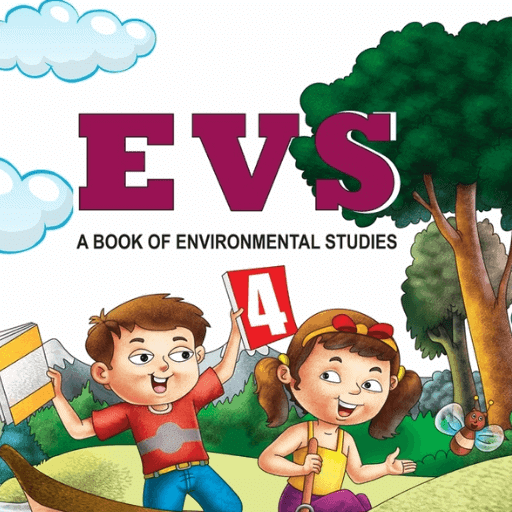
 | INFINITY COURSE Class 4 EVS NCERT Solutions, Worksheets & Videos 2026-202778,114 students learning this week · Last updated on Apr 22, 2026 |
Class 4 EVS NCERT Solutions, Worksheets Study Material





Trending Courses for Class 4

What is EVS for Class 4? Understanding Environmental Studies
Environmental Studies (EVS) for Class 4 is an integrated subject that combines elements of science, social studies, and environmental awareness, designed specifically for young learners in Indian schools. This subject helps students understand their immediate environment, develop keen observational skills, and foster genuine curiosity about the world around them. Unlike traditional subjects that focus purely on memorization, EVS for Class 4 emphasizes experiential learning through storytelling and real-life experiences.
The Class 4 EVS curriculum follows the NCERT guidelines and is structured to make learning enjoyable and relatable. Rather than dense textbooks, students encounter engaging narratives featuring characters like Nandu, Omana, and Amrita who take them on educational journeys. This narrative approach helps students connect classroom learning with their daily lives, making EVS Class 4 a truly engaging subject that goes beyond traditional academic boundaries.
Core Components of Class 4 Environmental Studies
- Social Awareness: Understanding family dynamics, community structures, and cultural diversity across India
- Environmental Concepts: Learning about natural resources, biodiversity, ecosystems, and conservation
- Life Skills Development: Building observation, critical thinking, and problem-solving abilities
- Practical Application: Connecting classroom knowledge with real-world scenarios and daily experiences
Importance of Learning EVS in Class 4
EVS holds tremendous significance in the primary education system of India because it forms the foundation for holistic child development. Class 4 is a crucial stage when students transition from concrete to more abstract thinking, and EVS for Class 4 bridges this gap perfectly through contextualized learning experiences.
The importance of learning Environmental Studies in Class 4 extends beyond academic performance. It cultivates environmental consciousness among young learners at an age when they're most receptive to new ideas. Students develop empathy, respect for diversity, and understanding of environmental conservation principles—all essential for responsible citizenship. Moreover, Class 4 EVS study material emphasizes sustainability concepts like water conservation and agricultural practices that are directly relevant to India's development challenges.
For Indian students, understanding EVS Class 4 concepts helps them appreciate the rich biodiversity of their country, understand different cultural practices across regions, and develop informed perspectives on pressing environmental issues. This foundation prepares them excellently for higher-level science and social studies in subsequent classes.
Complete Chapter List for Class 4 EVS
The Class 4 EVS curriculum comprises 27 comprehensive chapters that cover diverse themes spanning transportation, family structures, nature, resources, food, and cultural diversity. Having access to the complete chapter list helps students and parents plan their study schedule effectively and ensure comprehensive coverage of the syllabus.
| Chapter Number | Chapter Name | Primary Theme |
|---|---|---|
| 1 | Going To School | Transportation & Safety |
| 2 | Ear To Ear | Sensory Learning |
| 3 | A Day With Nandu | Daily Life & Routines |
| 4 | The Story Of Amrita | Environmental Conservation |
| 5 | Anita And The Honeybees | Biodiversity & Insects |
Each chapter in the Class 4 EVS chapters list is thoughtfully designed with specific learning outcomes. For instance, Omana Journey explores different modes of transportation, while From The Window encourages observational skills. Understanding this complete chapter structure helps students approach Class 4 EVS chapter wise notes systematically.
Additional Important Chapters
- Reaching Grandmother House - Travel and direction-finding
- Changing Families - Family diversity and relationships
- Hu Tu Tu, Hu Tu Tu - Communication and signals
- The Valley Of Flowers - Flora and seasons
- Changing Times - Social changes and progress
NCERT EVS Class 4: Textbook Overview and Key Topics
The NCERT EVS Class 4 textbook is the official curriculum prescribed by CBSE schools across India. The NCERT Class 4 EVS book is carefully structured to align with developmental psychology principles, ensuring that content is age-appropriate and engaging for nine-year-old learners. Understanding the NCERT textbook EVS Class 4 overview helps students and parents comprehend the scope and depth of this subject.
The NCERT solutions EVS Class 4 are invaluable supplements that provide answers to textbook questions, helping students verify their understanding and prepare more confidently. Each NCERT EVS Class 4 section builds upon previous learning, creating a coherent narrative thread throughout the curriculum.
Key Topic Areas in NCERT EVS Class 4
- Water Management: Topics like Too Much Water, Too Little Water and A River's Tale address water conservation critically important in India
- Agriculture & Farming: Basva's Farm introduces agricultural practices and farmer livelihoods
- Food & Culture: Chapters on Eating Together, Food And Fun, and Spicy Riddles explore India's culinary diversity
- Urban Living: Nandita In Mumbai introduces city life and urban environments
- Inclusivity & Social Awareness: Chuskit Goes To School celebrates diversity and accessibility
Best Free Study Resources for Class 4 Environmental Studies
Quality study resources are essential for effective EVS Class 4 preparation. EduRev provides comprehensive Class 4 EVS study material that covers every chapter systematically. The best EVS notes for Class 4 available on EduRev combine conciseness with completeness, helping students grasp concepts without feeling overwhelmed.
Class 4 EVS notes PDF download free options make studying flexible and accessible. Students can download Class 4 EVS notes PDF anytime, whether at home, in libraries, or during commutes. This accessibility ensures that learning isn't restricted by physical location or time constraints, a crucial advantage for busy Indian families juggling multiple responsibilities.
Types of Available Resources
| Resource Type | Best For | Link |
|---|---|---|
| Chapter Notes | Comprehensive understanding | NCERT Textbooks & Solutions |
| Practice Worksheets | Skill consolidation | Worksheets for EVS |
| Visual Learning | Concept clarity | PPTs |
| Quick Revision | Last-minute prep | Flashcards |
Class 4 EVS Notes and Chapter Summaries
Effective study relies on quality notes that capture essential information without unnecessary elaboration. Class 4 EVS notes free download options from EduRev provide structured summaries of each chapter, making revision manageable and efficient. These Class 4 EVS chapter summary materials help students quickly recall key concepts before assessments or discussions.
The best EVS notes for Class 4 combine clarity with context, explaining not just what students should learn but why it matters. When studying topics like Abdul In The Garden or From Market To Home, quality notes connect individual lessons to broader themes of environmental responsibility and economic systems.
How to Prepare for Class 4 EVS Effectively
The best way to study EVS Class 4 combines active reading, discussion, and practical observation. Unlike subjects requiring memorization of formulas, Class 4 EVS preparation tips emphasize understanding connections between concepts and real-world applications. Start by reading chapters carefully, then explore related worksheets and practice materials.
Class 4 EVS preparation should involve engagement with the natural and social environment around students. When studying A Busy Month, observe actual seasonal changes in your locality. When learning about Pochampalli, explore traditional crafts or cultural practices in your community. This grounding in lived experience makes EVS learning memorable and meaningful.
Effective Study Strategies
- Read chapters as stories, not textbook material
- Create mind maps connecting different chapters thematically
- Maintain an observation journal noting environmental and social changes around you
- Discuss chapter topics with family members, incorporating their perspectives
- Complete practice worksheets after finishing each chapter
- Use flashcards for revision of important concepts
Class 4 EVS Worksheets and Practice Materials PDF Download
Class 4 EVS worksheets serve as excellent tools for reinforcing learning and assessing understanding. The best EVS worksheets Class 4 include a mix of question types—multiple choice, short answer, and activity-based—that cater to different learning styles. Class 4 EVS worksheets free download options make practice accessible without additional expenses.
Class 4 EVS worksheets PDF downloads allow students to practice independently, building confidence before school assessments. These practice worksheets cover every chapter systematically, ensuring comprehensive skill development across all topics.
Key Learning Outcomes from Class 4 EVS Course
Upon completing the Class 4 EVS course, students develop competencies that extend far beyond academic knowledge. Key learning outcomes include enhanced observational abilities, environmental sensitivity, appreciation for diversity, and foundational scientific thinking. These competencies prepare students excellently for future learning in science and social studies.
The important topics in Class 4 Environmental Studies are designed to cultivate responsible citizens who understand their relationship with nature and society. Students learn that individual actions impact communities and environments, fostering a sense of responsibility that shapes their choices throughout life.
Important Topics in Class 4 Environmental Studies
Certain topics in Class 4 Environmental Studies deserve particular attention due to their relevance to Indian contexts and future learning. Water conservation topics are especially crucial in a country where water scarcity affects millions. Understanding The World In My Home helps students recognize global interconnections through everyday objects. Learning about Home And Abroad broadens perspectives on human diversity and cultural exchanges.
Class 4 EVS: Stories and Real-Life Learning Experiences
The narrative approach in Class 4 EVS makes learning deeply engaging. Each chapter tells stories of characters navigating real-life situations, making abstract concepts concrete and relatable. The Story of Amrita teaches environmental responsibility through personal experience, while Defence Officer Wahida inspires learners through positive role models demonstrating courage and service.
This story-based learning approach, grounded in Indian contexts and characters, makes EVS for Class 4 study material uniquely engaging for Indian students who see themselves represented in classroom learning.
Interactive Learning Tools for Class 4 EVS - PPTs and Flashcards
Modern learning requires varied instructional approaches catering to different learning preferences. Class 4 EVS PPT resources provide visual explanations of complex concepts, making abstract ideas concrete through illustrations and diagrams. EVS PPT for Class 4 covers topics systematically with engaging visuals that maintain student interest.
Class 4 EVS flashcards enable quick revision, essential for busy students. Whether memorizing characteristics of different animal species from chapters on biodiversity or recalling details about different regions from geographical chapters, flashcards provide efficient revision tools.
Combining these interactive tools—PPTs for comprehensive understanding and flashcards for quick revision—creates a well-rounded preparation strategy that maximizes learning retention and conceptual clarity.
EVS for Class 4 CBSE Exam Pattern 2026-2027
Getting acquainted with the environment and learning about the world around us is what Environmental Studies (EVS) is all about. It is a crucial subject for Class 4 students as it helps them to develop a better understanding of the surroundings and the world they live in. The subject is included in the curriculum to make students aware of the environment, its conservation, and the importance of sustainable development.
The Class 4 EVS syllabus comprises various topics, including plants, animals, natural resources, food, water, air, and more. The subject is assessed periodically through exams, and it is essential for students to be familiar with the exam pattern to score well.
Here are the key pointers to help students understand the EVS exam pattern for Class 4:
Exam Format:
The EVS exam for Class 4 is usually conducted in a written format. It comprises of multiple-choice questions, short answer questions, and long answer questions.
Weightage:
The weightage of the exam varies from school to school, but usually, the exam is divided into two parts, i.e., theory and practical. The theory part carries a weightage of 75%, while the practical part carries a weightage of 25%.
Syllabus:
The exam syllabus is based on the topics covered in the Class 4 EVS curriculum. Students must refer to their textbooks and study materials to cover all the topics.
Time Duration:
The time duration of the exam is usually 2-3 hours, depending on the school's guidelines. Students must manage their time efficiently to attempt all the questions.
Preparation:
To prepare for the exam, students must revise all the topics covered in the EVS curriculum thoroughly. They can take the help of their teachers, study materials, and reference books. Solving previous year question papers and sample papers can also help them to understand the exam pattern and improve their performance.
In conclusion, Environmental Studies is a crucial subject for Class 4 students, and they must understand the exam pattern to score well. By following the above-mentioned pointers, students can prepare well and excel in the EVS exam.


EVS for Class 4 Syllabus 2026-2027 PDF Download
Class 4 EVS Syllabus
Unit 1: Going to School
In this unit, students will learn about the importance of education and the different ways of going to school.
Unit 2: Ear to Ear
In this unit, students will learn about the different types of sounds, how they are produced, and how they affect our lives.
Unit 3: A Day with Nandu
In this unit, students will learn about the daily routine of a young boy named Nandu and the different activities he engages in throughout the day.
Unit 4: The Story of Amrita
In this unit, students will learn about the life of a young girl named Amrita and the challenges she faces in pursuit of her education.
Unit 5: Anita and the Honeybees
In this unit, students will learn about the importance of honeybees and how they help in pollination, as well as the process of honey-making.
Unit 6: Omana Journey
In this unit, students will learn about the journey of a young girl named Omana and the different modes of transportation she uses to get to her destination.
Unit 7: From the Window
In this unit, students will observe and describe the different things they see outside their window, such as plants, animals, and weather patterns.
Unit 8: Reaching Grandmother House
In this unit, students will learn about the different ways of travelling to their grandparents' house and the importance of family.
Unit 9: Changing Families
In this unit, students will learn about the different types of families and the changes that occur within families over time.
Unit 10: Hu Tu Tuhu Tu Tu
In this unit, students will learn about the different types of musical instruments and their cultural significance.
Unit 11: The Valley of Flowers
In this unit, students will learn about the different types of flowers found in the valley and their importance in the ecosystem.
Unit 12: Changing Times
In this unit, students will learn about the changes that occur over time in different aspects of life, such as technology, culture, and society.
Unit 13: A River's Tale
In this unit, students will learn about the importance of rivers and the different ways they are used by humans.
Unit 14: Basva Farm
In this unit, students will learn about the different types of crops and animals found on a farm and the importance of sustainable farming practices.
Unit 15: From Market to Home
In this unit, students will learn about the different types of goods sold in a market and the process of buying and selling.
Unit 16: A Busy Month
In this unit, students will learn about the different festivals and celebrations that occur in a particular month.
Unit 17: Nandita in Mumbai
In this unit, students will learn about the different aspects of life in Mumbai, such as transportation, food, and culture.
Unit 18: Too Much Water, Too Little Water
In this unit, students will learn about the importance of water and the challenges posed by water scarcity and flooding.
Unit 19: Abdul in the Garden
In this unit, students will learn about the different types of plants found in a garden and the process of gardening.
Unit 20: Eating Together
In this unit, students will learn about the importance of sharing meals with family and friends and the different types of foods consumed in different parts of India.
Unit 21: Food and Fun
In this unit, students will learn about the different types of foods and games enjoyed by children in different parts of India.
Unit 22: The World in My Home
In this unit, students will learn about the different cultures and traditions found within their own homes and communities.
Unit 23: Pochampalli
In this unit, students will learn about the traditional art of Pochampalli weaving and the cultural significance of this art form.
Unit 24: Home and Abroad
In this unit, students will learn about the different types of homes and lifestyles found in different parts of the world.
Unit 25: Spicy Riddles
In this unit, students will learn about the different types of spices used in Indian cuisine and how they are used to create flavourful dishes.
Unit 26: Defence Officer Wahida
In this unit, students will learn about the life of a female defence officer and the challenges she faces in her line of work.
Unit 27: Chuskit Goes to School
In this unit, students will learn about the challenges faced by children with disabilities and the importance of inclusive education.
Unit 28: Worksheets for EVS
In this unit, students will practice their knowledge of the different topics covered in EVS through worksheets and other activities.
Unit 29: NCERT Textbooks & Solutions
In this unit, students will study the NCERT textbooks and solutions for Class 4 EVS to reinforce their learning and prepare for assessments.
This course is helpful for the following exams: Class 4, Grade 4
How to Prepare EVS for Class 4?
How to Prepare EVS for Class 4?
Preparing for EVS (Environmental Studies) for Class 4 can seem daunting at first, but with the right approach, it can become an enjoyable and enriching experience. Here are some tips to help you prepare for your EVS course:
Understand the Course and Category
The first step is to understand the EVS course and category that you will be studying. The EduRev course for Class 4 is designed to introduce students to the basic concepts of the environment, including topics such as air, water, soil, plants, and animals. The category includes interactive lessons, videos, quizzes, and worksheets to help students understand these concepts.
Plan Your Study Time
It's essential to plan your study time effectively to ensure that you cover all the necessary topics and concepts. Set aside a specific time each day or week to study EVS. Use the course materials provided by EduRev to guide your study and make notes on key points.
Study Actively
Studying actively means engaging with the material and thinking critically about the concepts you're learning. Use the interactive lessons, videos, and quizzes provided by EduRev as a starting point, but also try to research further and ask questions about the topics that interest you. This will help you gain a deeper understanding of the subject and retain the information better.
Practice and Review
Practice is key to mastering any subject, and EVS is no exception. Use the worksheets and quizzes provided by EduRev to practice what you have learned. Also, review your notes regularly to reinforce your understanding of the concepts.
Get Help When You Need It
If you're struggling with a particular concept or topic, don't hesitate to ask for help. You can reach out to your teacher or classmates for assistance, or use the discussion forums provided by EduRev to ask questions and get feedback.
In conclusion, preparing for EVS for Class 4 requires a consistent effort and a systematic approach. By following these tips and using the EduRev course materials, you can gain a solid understanding of the subject and excel in your studies.
Importance of EVS for Class 4
Introduction:
EVS or Environmental Studies is an important subject that is taught to students of Class 4. The subject is designed to provide students with knowledge about the environment and its components. The course is offered by EduRev and is designed to help students understand the importance of the environment and the need to protect it.
Key Pointers:
1. Understanding the Environment: The EVS course for Class 4 is designed to help students understand the environment and its components. This includes topics such as air, water, land, and living organisms.
2. Developing a Sense of Responsibility: The course helps students develop a sense of responsibility towards the environment. Students are taught about the importance of conserving natural resources and reducing pollution.
3. Encouraging Sustainable Living: The course encourages students to adopt sustainable living practices. This includes topics such as waste management, energy conservation, and sustainable agriculture.
4. Building Awareness: The EVS course for Class 4 helps students build awareness about environmental issues. Students are taught about the impact of climate change, deforestation, and pollution on the environment.
5. Fostering a Love for Nature: The course helps students develop a love for nature. Students are encouraged to explore the natural world and appreciate its beauty.
Conclusion:
In conclusion, the EVS course for Class 4 is an important subject that helps students understand the environment, develop a sense of responsibility, and adopt sustainable living practices. The course also helps students build awareness about environmental issues and fosters a love for nature. EduRev offers a comprehensive EVS course for Class 4 that is designed to help students develop a deep understanding of the environment and its importance.
EVS for Class 4 FAQs
| 1. What are the main topics covered in EVS Class 4 curriculum? |  |
| 2. How do plants and animals adapt to their habitats in Class 4 EVS? | |
| 3. What are the different types of soil and their uses explained in EVS Class 4? | |
| 4. How does the water cycle work and why is it important for Class 4 understanding? | |
| 5. What are community helpers and their roles in our society according to EVS Class 4? | |
| 6. What nutritious foods should Class 4 students eat for a balanced diet? | |
| 7. How do seasonal changes affect plants, animals, and human activities in EVS Class 4? | |
| 8. What is the human body's basic structure and how do different systems work together? | |
| 9. How should Class 4 students practice good hygiene and disease prevention habits? | |
| 10. What are natural resources and how should we conserve them according to EVS Class 4? | |
Best EVS for Class 4 NCERT Solutions and Study Materials
- Best Videos for learning a topic, you will never forget a topic you watched
- Detailed Docs for in-depth knowledge with easy illustrative examples
- Chapter-wise questions to practice while learning the concepts
- Attempt NCERT questions as tests to make sure your foundation is strong
 | View your Course Analysis |  |
 | Create your own Test | |



|
 Videos
 Documents
 Tests
Tests Ratings
 | Explore Courses for Class 4 exam |  |
Course Speciality
- Best Videos for learning a topic, you will never forget a topic you watched
- Detailed Docs for in-depth knowledge with easy illustrative examples
- Chapter-wise questions to practice while learning the concepts
- Attempt NCERT questions as tests to make sure your foundation is strong


