How to Prepare for NEET Biology with EduRev?


Every candidate who is appearing for NEET feels that the Biology section is their strength. Why then do some score more than the others? The reason is the preparation strategy for NEET Biology.
Those appearing for the National Eligibility cum Entrance Test (NEET) know that the biology section is the most scoring part of the examination. With 100 questions, the Biology section constitutes 50 per cent of the question paper. Because biology is largely theoretical and concept-driven, an organised strategy can significantly raise your score. Below is a structured, syllabus-aligned plan with practical steps and study techniques to prepare effectively for NEET Biology.

Step 1: Understand the NEET Biology Exam Pattern and Syllabus
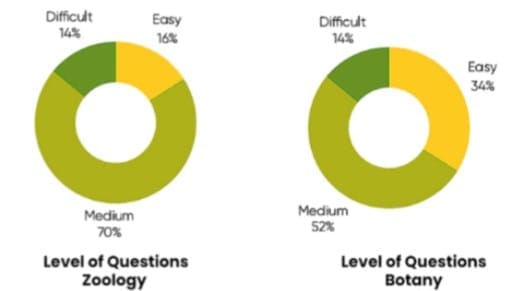
- Exam Pattern: Biology is broadly divided into Botany and Zoology, together making the 100 questions allotted to Biology (usually 45 questions each for Botany and Zoology in many practice resources).
- Coverage: NEET Biology questions are drawn from Class 11 and Class 12 NCERT. Questions are distributed roughly evenly across both years; the combined syllabus contains approximately 32 chapters from the two-year curriculum.
- Syllabus source and revision link: For a topic-wise and updated syllabus reference, consult the NEET revised syllabus link: NEET Revised Syllabus 2026: Topic-wise Details & Important Chapters.
Class 11 (major topics)
- Diversity in the living world: The Living World, Biological Classification, Plant Kingdom, Animal Kingdom.
- Structural organisation - plants and animals: Morphology of Flowering Plants, Anatomy of Flowering Plants, Structural Organisation in Animals.
- Cell structure and function: Cell - The Unit of Life, Biomolecules, Cell Cycle and Cell Division.
- Plant physiology: Photosynthesis in Higher Plants, Respiration in Plants, Plant - Growth and Development.
- Human physiology: Breathing and Exchange of Gases, Body Fluids and Circulation, Excretory Products and Their Elimination, Locomotion and Movement, Neural Control and Coordination, Chemical Coordination and Integration.
Class 12 (major topics)
- Reproduction: Sexual Reproduction in Flowering Plants, Human Reproduction, Reproductive Health.
- Genetics and Evolution: Principles of Inheritance and Variation, Molecular Basis of Inheritance, Evolution.
- Biology and Human Welfare: Human Health and Diseases, Microbes in Human Welfare.
- Biotechnology and its applications: Biotechnology - Principles and Processes, Biotechnology and its Application.
- Ecology and environment: Organisms and Populations, Ecosystem, Biodiversity and its Conservation.
Step 2: Read and Re-read NCERT - Build Concepts First

- Read NCERT before watching video lectures: Always read the chapter once from the textbook before starting videos or other study material. After finishing video lectures, read the textbook again. This two-pass approach helps stabilise understanding and resolves many confusions.
- Understand, do not only memorise: Attend teacher explanations or watch reliable video lectures (for example, EduRev lectures). Use those to clarify concepts and then return to NCERT to consolidate.
- Every line matters: Read every line of NCERT and highlight important sentences. Many NEET questions are direct or subtle variations of lines in NCERT.
- No doubt should remain unresolved: If a sentence or concept is unclear, ask your teacher or post the doubt on a discussion forum. Clearing small doubts early prevents bigger gaps later.
- Convert flowcharts into concise paragraphs: Flowcharts are useful for visual learning, but rephrasing them into short paragraphs helps with recall and answering descriptive-style MCQs.
- Pay attention to numerical values: Note values given in NCERT and practise how they might be tested. For example, Human Reproduction chapter states that each testis contains 250 lobules. If a question asks for the number of lobules in a pair of testes, compute 500 in your notes so you won't be confused in the exam.
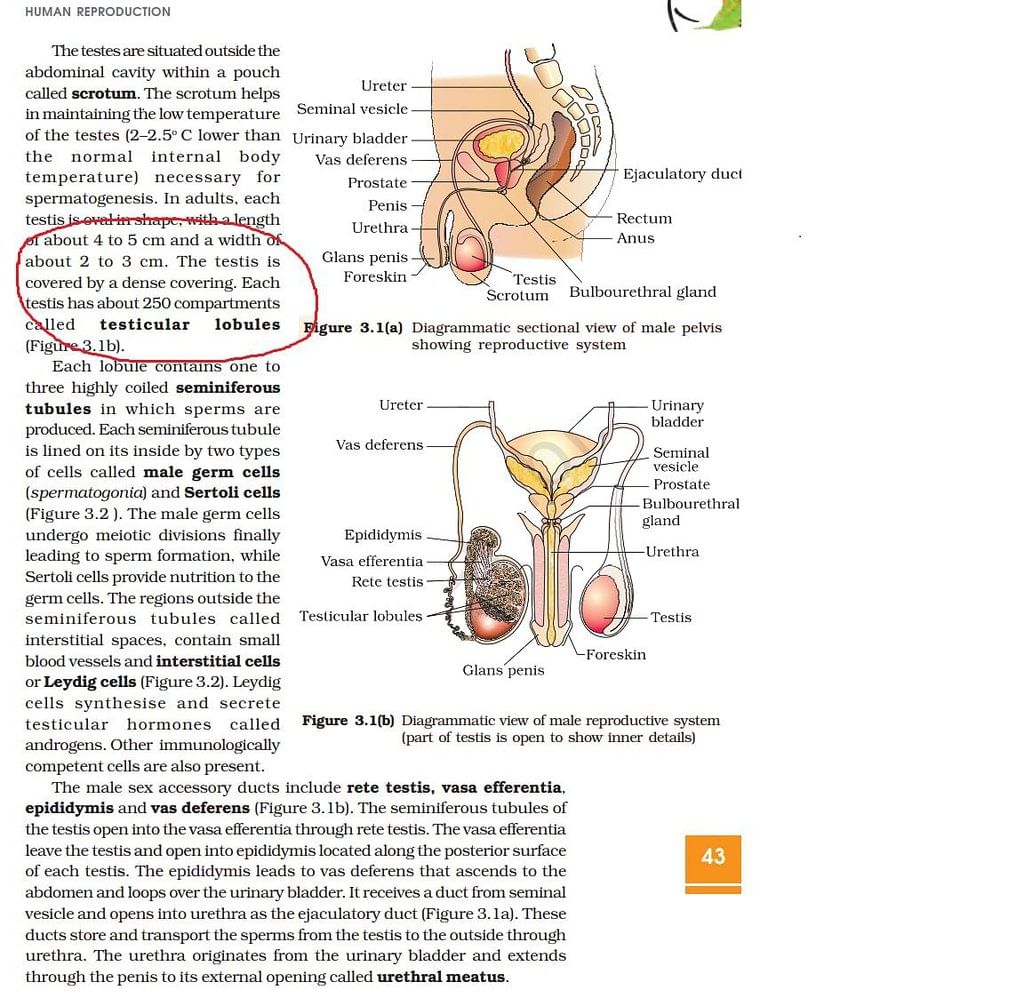
- Simplify NCERT with annotations: Use sticky notes, coloured pens and highlighters to mark keywords, definitions and important lines. These small annotations speed up revision.
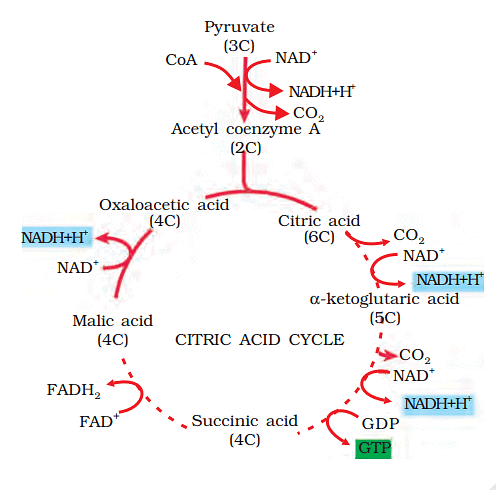
- Understand processes deeply: For cycles and multi-step processes (eg. Krebs cycle), focus on the reasoning behind each step. Knowing what happens and why allows you to answer conceptual MCQs such as how many substrate-level phosphorylations occur in the Krebs cycle.
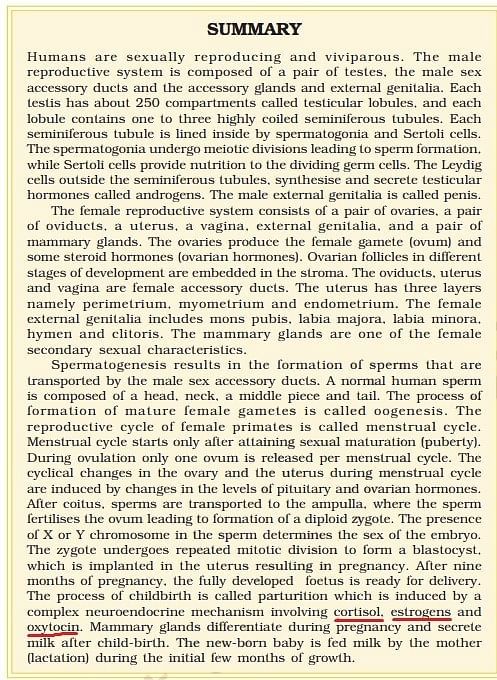
- Do not skip NCERT summaries: Many questions are taken from NCERT summaries. For instance, the Human Reproduction summary mentions the significance of hormones such as cortisol, oestrogen and oxytocin; such details may appear in questions even if they receive limited prominence in the main text.
- Solve NCERT exercises: Attempt all exercise questions in NCERT. Where an answer is not explicit in the main text, seek teacher guidance or reliable solution sources.
- Memorise examples and nomenclature: NCERT contains many examples (for example, examples in Morphology of Flowering Plants). Making a list of examples and using mnemonics helps memorise taxonomy, common examples and specialised terms.
- Make strictly NCERT-oriented short notes: Prepare your own notes that are faithful to NCERT language and keywords. NEET often tests NCERT phrasing and keywords; quick recall of these helps save time in the exam.
- Solve NCERT-based MCQs and PYQs soon after completing the chapter: Practise past year questions (PYQs) and NCERT-based MCQs to test concept retention. EduRev and similar platforms provide chapter-wise MCQs and PYQ collections.
A common misconception among NEET aspirants
While many NEET questions originate from NCERT, some appear difficult because students have only read the book superficially two or three times. If you study NCERT deeply - line by line and concept by concept - even the tougher NCERT-based questions become recognisable as NCERT content.
Therefore: By exam day you should have read NCERT enough times that you can identify and solve questions originating from any line of the textbook.
Step 3: Strategise - Focus on High-Weightage Topics
Because the Biology syllabus is large, divide it into manageable parts and prioritise according to weightage and relative ease of scoring. A practical three-tier strategy is:
- Must-do: High-priority chapters you must master (examples: Animal Respiration; Reproduction & Development; Animal Nutrition; Animal Tissues; Biotechnology; Ecology).
- Do if time permits: Important but lower-priority chapters to attempt after must-do topics (examples: Anatomy of Flowering Plants; detailed Animal Kingdom sections; Microbes and Origin of Life; Growth, Repair and Regeneration; Biodiversity).
- Do or Die: Chapters that are frequently tested and relatively scoring - focus and ensure full coverage (examples: Photosynthesis, Cell Structure, Plant Morphology, Plant Nutrition, Genetics, Monera).
NEET Biology weightage (summary)
Prioritise chapters with higher historical weightage to gain maximum marks efficiently. The table below summarises approximate contribution by broad units.
| Botany | |
| Genetics and Evolution Weightage = 21.28% | High priority due to large share of questions. |
| Ecology and Environment Weightage = 19.15% | A major unit; thorough understanding is essential. |
| Plant Physiology Weightage = 17.02% | Important unit with steady question presence. |
| Cell Structure & Function Weightage = 14.89% | Fundamental unit of life; high importance in exams. |
| Sexual Reproduction in Flowering Plants Weightage = 8.51% | Important plant reproduction processes are commonly tested. |
| Zoology | |
| Human Physiology Weightage = 27.91% | Largest weighted unit in zoology - thoroughly prepare all systems. |
| Biology and Human Welfare Weightage = 18.60% | Societally relevant topics; many direct MCQs asked from here. |
| Reproduction Weightage = 13.95% | Important processes from conception to birth often appear in exams. |
| Biotechnology Weightage = 11.63% | Application of biological tools and techniques; regularly tested. |
| Biomolecules Weightage = 9.30% | Essential molecules and their functions; basic but frequently asked. |
Top 10 chapters in recent years (approximate frequency)
| Name of the Chapter | Questions (approx.) |
|---|---|
| Molecular Basis of Inheritance | 10 |
| Biotechnology: Principles & Processes | 7 |
| Organisms & Population | 6 |
| Animal Kingdom | 5 |
| Cell Cycle & Cell Division | 5 |
| Plant Kingdom | 4 |
| Cell | 4 |
| Biomolecules | 4 |
| Plant Growth & Development | 4 |
| Biotechnology & its Application | 4 |
Cover the whole syllabus, but emphasise chapters with greater historical weightage for efficient scoring and focused revision.
Step 4: Focus on Diagrams and Conceptual Clarity
Conceptual clarity is indispensable for NEET Biology. Build strong understanding first, then practise application through questions and diagrams.
- Mind maps: Create chapter-wise mind maps for quick revision. EduRev and other platforms provide ready mind maps, but making your own improves retention. Example mind maps: here.
- Tables and charts: Prepare short tabular notes for microbes, nomenclature, differences between phyla, and physiological values - tables are easier to memorise than long paragraphs.
- Make notes in margins: Write concise pointers or doubts in the NCERT margins so that every time you revise a chapter those key points are revisited.
- Practice diagrams: Many NEET questions are diagram-based. Practise drawing and labelling NCERT diagrams accurately and learn common variations.
- Diagram-based MCQs: Regularly solve diagram-based questions to become comfortable with rotated, cropped or partially labelled figures.
Step 5: Practice - PYQs, Topic-wise and Chapter-wise Tests
Theory becomes useful only when applied through practice. Regular testing builds speed, accuracy and exam temperament.
- Solve NEET PYQs: Previous year questions reveal question patterns and frequently asked concepts. Start with PYQs available here: NEET Past Year Papers.
- Practice exercise and exemplar problems: Use NCERT exemplar and curated exercise solutions to strengthen problem-solving habits. EduRev's topic pages contain solved questions: Class 12 Biology resources.
- Revise via short notes: Keep concise revision notes (NCERT-oriented) for frequent review. EduRev provides NCERT-based revision notes for Class 11 and Class 12.
- Topic-wise tests: After completing each topic, immediately take a topic-wise test to assess retention and identify weak subtopics. Topic-wise tests: link.
- Chapter-wise tests: After finishing each chapter, do chapter-wise tests to consolidate the whole chapter's concepts and ensure readiness.
- Additional practice books: Use supplementary books such as Truman's Objective Biology - Tyagi & Goyal for extra practice questions, but complete NCERT fully before moving to other books.
- Subject-wise mock tests: When you feel confident in Biology, attempt subject-only mock tests for timed practice and accuracy. EduRev subject mocks are available: Biology subject mocks.
Step 6: Take Up Mock Tests and Full Test Series
- Start mock tests early: Begin subject mocks as soon as a topic set is complete. Mocks help you learn time management, stamina for 3-hour tests, and exam discipline.
- Complete mocks: Regular full-syllabus mocks are essential for overall strategy. Start full mocks when you are sufficiently prepared; EduRev full mock series can be used: Full Mock Tests.
- Use mocks to identify tricky questions: Mark and revisit questions you find difficult. Analyse errors and correct conceptual gaps.
- Practice PYQs repeatedly: Give many previous year papers (10+ years or more). EduRev provides collections of PYQs including long time-series compilations.
- When to begin full mocks - guidance:
- First-time NEET aspirants: Build the syllabus over two years; take part tests seriously and begin full-syllabus mock tests about two months before the exam (for a May exam start mocks in March). If Class 11 syllabus is finished, attempt 10-12 class-11 mocks through the year.
- Droppers: Begin full mocks after you have completed your syllabus. If you start mocks late (one month before exam), make mocks daily and evaluate every day.
- Practice tests at the exam time: Train your body and mind to take practice tests during the NEET exam time (commonly 2-5 pm) to avoid drowsiness and improve alertness in that slot.
- Learn from mistakes: Mistakes on mocks are valuable - analyse them and avoid repeating the same errors in subsequent tests.
- Avoid collaborative cheating on mocks: Splitting topics with friends during mocks undermines long-term learning. Attempt tests honestly to identify real weaknesses.
- Resist using shortcuts during practice: Do not consult notes or books while attempting mocks; simulate actual exam conditions for accurate evaluation.
Step 7: Revise Consistently

Revision is as important as first-time learning. Regular revision keeps concepts fresh and improves recall under pressure.
- Frequency: NCERT biology should ideally be revised many times - top aspirant advice suggests revisiting NCERT around 20-25 times through the entire preparation period (this includes quick passes and focused revisions).
- Use concise notes: Revise using your own short notes and EduRev's NCERT-based revision notes for quick refreshers: Click here.
- Margin notes and solved queries: Write extra points or small solved examples in the margins of NCERT to make future revisions faster.
- Time-box your revision: Limit revision time per chapter (for example, set a maximum of one hour per chapter for revision) so you revise widely rather than spending too long on any single chapter.
- Clear doubts before moving on: During revision, if a doubt appears, resolve it immediately before continuing; unresolved doubts grow in volume if ignored.
- Best revision technique: Combine short notes, topic-wise tests and subject-wise mocks. EduRev provides subject-wise tests, topic-wise tests and part tests & full mocks for structured revision.
For a fast-track plan, use an expert-designed timetable such as the 4-month NEET planner which covers the full syllabus with practice tests.
Best of luck for your exam.
Additional Information
1. Overall understanding and strategy documents
- NEET Syllabus 2026, Important Chapters and Cut-Off
- How to Prepare for NEET with EduRev?
- Importance of NCERT for NEET
2. Subject-wise strategies and resources
FAQs on How to Prepare for NEET Biology with EduRev?
| 1. How can I effectively prepare for the NEET Biology exam? |  |
| 2. What are some important tips for studying biology for NEET? | |
| 3. How important are diagrams in NEET Biology preparation? | |
| 4. What should be the focus while practicing for NEET Biology? | |
| 5. How can I improve my conceptual clarity in NEET Biology? | |





