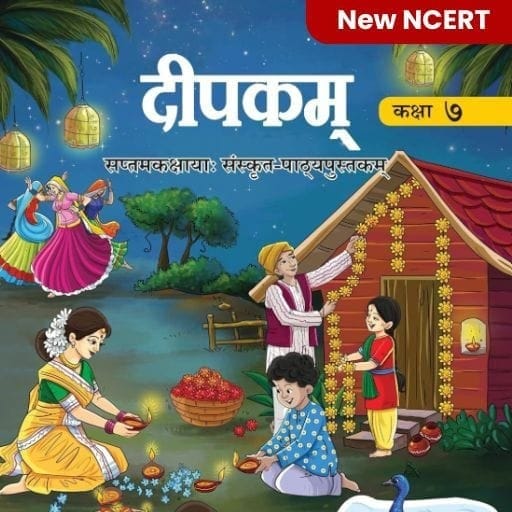
 | INFINITY COURSE Class 7 Sanskrit (Deepakam) - NCERT Solutions, MCQs & Notes4,924 students learning this week · Last updated on Apr 07, 2026 |
Class 7 Sanskrit (Deepakam) - NCERT Study Material







Trending Courses for Class 7

NCERT Class 7 Sanskrit Deepakam: Complete Course Overview
Class 7 Sanskrit represents a crucial turning point in your Sanskrit learning journey. The NCERT Class 7 Sanskrit Deepakam textbook is thoughtfully designed to build strong foundational skills in reading, comprehension, and grammar. Whether you're preparing for your annual exams or aiming to develop genuine fluency in संस्कृत, understanding the complete structure of this course is essential for success.
Deepakam, which means "lamp" in Sanskrit, aptly illuminates the path to Sanskrit proficiency. The textbook combines engaging stories, moral narratives, and grammatical concepts that work together to create a comprehensive learning experience. With 12 main lesson chapters plus dedicated grammar sections, this NCERT Sanskrit Class 7 new NCERT curriculum offers everything you need to excel.
What Makes Deepakam Special?
This Sanskrit Class 7 textbook stands out because it balances literature with language skills. You'll encounter ancient Sanskrit wisdom alongside practical grammar lessons, making your Sanskrit Class 7 course both intellectually enriching and practically useful. The pedagogical approach focuses on building confidence in reading authentic Sanskrit texts, which is precisely what Class 7 students need at this stage.
Class 7 Sanskrit Syllabus - Chapter-wise Breakdown
The Class 7 Sanskrit syllabus is organized into distinct sections, each serving a specific purpose in your language development. Understanding this structure helps you plan your preparation strategy effectively.
The Twelve Main Lesson Chapters
Your Class 7 Sanskrit course includes twelve substantive chapters that cover diverse themes. These aren't just random stories—each chapter is carefully selected to teach vocabulary, grammar structures, and cultural values simultaneously.
| Chapter Number | Chapter Name | Primary Focus |
|---|---|---|
| 1 | वन्देभारतमातरम् | Patriotism and National Pride |
| 2 | नित्यं पिबाम: सुभाषितरसम् | Wise Sayings and Philosophy |
| 3 | मित्राय नमः | Friendship and Relationships |
| 4 | न लभ्यते चेत्आम्लं द्राक्षाफलम् | Folk Tales and Moral Lessons |
| 5 | सेवा हि परमो धर्म: | Service as Highest Duty |
Start your Sanskrit Class 7 preparation by exploring वन्देभारतमातरम्, the opening chapter that sets the tone for patriotic values. This chapter introduces you to formal Sanskrit prose while connecting you to Indian cultural traditions.
For students seeking wisdom and philosophical insights, नित्यं पिबाम: सुभाषितरसम् offers a collection of Sanskrit सुभाषित (wise sayings) that are both memorable and morally instructive. This is one of the most popular Class 7 Sanskrit chapters for competitive exam preparation.
Continuing Through the Curriculum
As you progress, मित्राय नमः teaches you about friendship, while न लभ्यते चेत्आम्लं द्राक्षाफलम् presents engaging folk narratives. सेवा हि परमो धर्म: emphasizes service as life's highest calling, a concept deeply rooted in Indian philosophy.
The remaining chapters, including क्रीडाम वयं श्लोकान्त्याक्षरीम् and ईशावास्यम्इदं सर्वम्, introduce you to Upanishadic wisdom and philosophical depth. हितं मनोहारि च दु र्लभं वचः teaches the art of meaningful speech, while अन्नाद् भवन्ति भूतानि connects you to life and sustenance concepts.
The historical narratives दशमः कः ?, द्वीपेषुरम्यः द्वीपोऽण्डमानः, and वीराङ्गना पन्नाधाया provide cultural context and expand your vocabulary significantly. These chapters are particularly important for Class 7 Sanskrit chapter solutions and examinations.
वन्देभारतमातरम् और अन्य महत्वपूर्ण पाठों का विस्तृत विवरण
Understanding key chapters deeply is essential for scoring well in your Class 7 Sanskrit exams. Each chapter in Deepakam Sanskrit textbook carries specific learning objectives and vocabulary elements that you'll encounter repeatedly.
Opening with Patriotic Pride
वन्देभारतमातरम् sets your Sanskrit journey's tone by connecting you to India's nationalist heritage. This chapter teaches you formal Sanskrit structures while instilling cultural pride—a unique feature of Indian education. The vocabulary here includes words related to national identity, which appear frequently in other Sanskrit texts you'll study later.
Wisdom Through सुभाषित
The सुभाषित collection in नित्यं पिबाम: सुभाषितरसम् represents Sanskrit's most quotable literature. These Sanskrit Class 7 important chapters serve dual purposes: they're short enough to memorize, yet profound enough to reflect upon for years. Many of these sayings appear in competitive examinations and higher studies, making Class 7 Sanskrit notes on this chapter particularly valuable.
Real-Life Narratives
Chapters like वीराङ्गना पन्नाधाया tell stories of historical figures, expanding your awareness beyond textbook learning. Such Class 7 Sanskrit chapter solutions require understanding not just the language but also the historical and cultural context—skills that develop your overall communicative competence.
Sanskrit Grammar for Class 7: शब्दरूपाणि और धातुरूपाणि
Grammar forms the backbone of Sanskrit proficiency. Unlike some languages where you can survive with vocabulary alone, Sanskrit's grammatical precision is essential for correct reading and writing. The Class 7 Sanskrit grammar topics are structured progressively, building from letter recognition to complex verb conjugations.
Foundation: वर्णमात्रा-परिचयः
Before diving into words and verbs, you need to master वर्णमात्रा-परिचयः (Introduction to letters and vowel markers). This seemingly simple chapter is foundational. It teaches you how Sanskrit combines consonants and vowel markers to create distinct sounds. Many students rush through this, but investing time here pays dividends in pronunciation and reading accuracy.
Nouns and Their Forms
Understanding शब्दरूपाणि (noun declensions) is crucial for reading Sanskrit sentences. Sanskrit nouns change form based on their grammatical role—nominative, accusative, instrumental, and so on. Your Class 7 Sanskrit course introduces this systematically. The concept might seem overwhelming initially, but with consistent practice, it becomes intuitive.
| Sanskrit Case (विभक्ति) | Function | Example Application |
|---|---|---|
| Nominative (प्रथमा) | Subject of sentence | कन्या गृहे आसीत् |
| Accusative (द्वितीया) | Direct object | सः पुस्तकं पठति |
| Instrumental (तृतीया) | Means or instrument | पेनेन लिखितम् |
| Locative (सप्तमी) | Location or place | वने वसति |
Verbs and Their Conjugations
Equally important is धातुरूपाणि (verb conjugations). Verbs in Sanskrit change based on person, number, and tense. Learning these patterns—whether in present tense, past tense, or imperative mood—enables you to construct and understand sentences. Your Sanskrit grammar Class 7 preparation must include thorough practice with verb roots (धातु) and their various forms.
Free Study Resources for Class 7 Sanskrit Deepakam
Quality preparation doesn't require expensive coaching. With strategic use of available resources, you can master Class 7 Sanskrit effectively. EduRev provides comprehensive Class 7 Sanskrit study material that covers every aspect of the Deepakam textbook.
Structured Learning Aids
To enhance your Class 7 Sanskrit preparation, explore specialized learning tools. Flashcards are particularly effective for vocabulary building and quick revision. They help you memorize vocabulary in context, which is far more effective than isolated word lists. Regular flashcard practice, even for 10-15 minutes daily, compounds into significant improvement over weeks.
Mind Maps offer visual learning advantage, helping you connect related concepts and understand chapter themes holistically. These are particularly useful before exams when you need rapid revision and want to ensure you haven't missed important connections between topics.
Practice and Assessment
Worksheet & Worksheet Solutions provide structured practice with immediate feedback. Working through worksheets helps you identify weak areas and builds confidence before actual examinations. Class 7 Sanskrit worksheet solutions also serve as reference material when you're stuck on specific problems.
Best Class 7 Sanskrit Notes and PDF Download
Effective notes become your personal study guides. Instead of passively reading textbooks, creating or using well-organized Class 7 Sanskrit notes PDF helps you focus on essential concepts. Good notes capture the "why" behind grammar rules and provide memory hooks for complex concepts.
What Good Notes Should Include
- Key vocabulary with meanings in both Sanskrit and English
- Grammar concepts with practical examples from chapters
- Important verb and noun forms organized logically
- Cultural context and historical background for chapters
- Common mistakes students make and how to avoid them
- Links between different chapters and grammar concepts
Utilizing Digital Resources
Class 7 Sanskrit PDF free download options are widely available. While having physical textbooks is valuable, digital formats allow you to search quickly, annotate, and access materials anywhere. Whether you prefer NCERT Sanskrit Class 7 PDF in your mobile or printed format, what matters most is consistent engagement with the material.
How to Prepare for Class 7 Sanskrit Effectively
Mere reading isn't preparation—active engagement transforms learning. A smart Class 7 Sanskrit preparation strategy involves regular practice, consistent revision, and strategic use of available resources.
Daily Practice Routine
- Spend 15-20 minutes reading one paragraph from your chapter
- Look up unfamiliar words and maintain a vocabulary list
- Practice writing simple sentences using new vocabulary
- Review grammar concepts through flashcards for 10 minutes
- Complete one worksheet exercise focused on current chapter
Weekly Revision Strategy
Weekly revision prevents knowledge decay. Dedicate time to review previous chapters, reconnect concepts, and solidify grammar understanding. The best way to learn Class 7 Sanskrit involves spacing repetition—reviewing material multiple times across weeks rather than cramming everything before exams.
Chapter-Wise Study Tips
For each new chapter, follow this proven approach: First, read the chapter title and predict what you'll learn. Then read actively, annotating difficult words. Next, answer comprehension questions, discussing them with peers if possible. Finally, connect the chapter's vocabulary and grammar concepts to previously studied material.
संस्कृत सुभाषित और श्लोक: Class 7 Important Chapters
Sanskrit सुभाषित (wise sayings) and श्लोक (verses) represent Sanskrit literature's pinnacle. Class 7 Sanskrit important chapters rich in these gems deserve special attention because they combine language learning with cultural and philosophical depth.
The Power of Memorized Verses
Unlike prose that you must translate word-by-word, memorized verses create mental templates. Once you internalize a श्लोक, you automatically recognize similar grammatical patterns and vocabulary in other texts. This accelerates your overall Sanskrit proficiency significantly.
Cultural Relevance
These Chapter contain wisdom that resonates across centuries. Learning Sanskrit through सुभाषित grounds your language study in genuine intellectual content rather than artificial exercises. This approach aligns with how Sanskrit was traditionally taught and makes your learning more meaningful.
Class 7 Sanskrit Worksheets with Solutions
Worksheets provide structured practice environments. Unlike random question banks, well-designed worksheets follow a progression—starting with basic comprehension and advancing to application and analysis. Class 7 Sanskrit worksheets with solutions offer immediate feedback, which is crucial for learning.
Using Worksheets Strategically
- Complete worksheets without consulting solutions initially
- Review your answers and identify patterns in mistakes
- Study the provided solutions to understand alternative approaches
- Attempt similar problems independently to verify mastery
- Maintain an error log for revision before exams
Mind Maps and Flashcards for Sanskrit Class 7
Visual and interactive learning tools address different learning preferences. Class 7 Sanskrit mind maps help visual learners, while Class 7 Sanskrit flashcards suit those who benefit from spaced repetition and active recall.
Creating Effective Learning Tools
While pre-made resources are valuable, creating your own mind maps and flashcards deepens your understanding. The act of organizing information—deciding what's important enough to include, how concepts relate, and how to phrase definitions—itself constitutes learning.
Important Topics in NCERT Deepakam Sanskrit Textbook
Certain topics appear repeatedly in examinations. Understanding which NCERT Deepakam Sanskrit textbook topics receive greatest emphasis helps you allocate study time wisely.
Frequently Examined Areas
- Grammar rules covered in शब्दरूपाणि and धातुरूपाणि chapters
- Vocabulary from literary chapters like वन्देभारतमातरम्
- Comprehension and translation of prose passages
- Identification and explanation of grammatical concepts in sample sentences
- Cultural and historical context of chapter narratives
Class 7 Sanskrit Chapter Solutions and Explanations
Quality solutions provide more than just answers—they explain reasoning. Your Class 7 Sanskrit chapter solutions should help you understand not just what the correct answer is, but why it's correct. This develops your Sanskrit competence rather than mere memorization.
Throughout your Class 7 Sanskrit course, remember that consistency matters more than intensity. Regular, moderate effort compounds into mastery. With the resources available through EduRev and the guidance provided in this article, you have everything needed to excel in Class 7 Sanskrit. Begin today, study systematically, and watch your Sanskrit proficiency flourish.
संस्कृत Class 7 (Deepakam) - New NCERT CBSE Exam Pattern 2026-2027
संस्कृत Class 7 (Deepakam) - New NCERT Exam Pattern for Class 7
संस्कृत (Sanskrit) is an essential subject in the Class 7 curriculum, especially with the New NCERT syllabus. Understanding the exam pattern is crucial for students to prepare effectively. Below are the key components of the exam pattern for Class 7 Sanskrit (Deepakam).
1. Exam Structure
- Type of Questions: The exam typically includes multiple-choice questions, short answer questions, and long answer questions.
- Distribution of Marks: The total marks are usually divided among different sections, with each section focusing on various aspects of the syllabus.
2. Sections of the Exam
- Reading Comprehension: Students will be assessed on their ability to understand and interpret passages from the textbook.
- Grammar: Questions related to the rules of Sanskrit grammar, including sentence formation and vocabulary.
- Translation: Students may be required to translate sentences from Sanskrit to their native language and vice versa.
3. Important Topics to Focus On
- Shlokas: Recitation and understanding of important shlokas from the syllabus.
- Prose and Poetry: Analysis of prose and poetry sections, including themes and literary devices.
- Grammar: Key grammatical concepts such as sandhi, samasa, and vibhakti.
4. Preparation Tips
- Regular Revision: Consistently review the chapters and practice exercises to reinforce learning.
- Mock Tests: Take mock tests to familiarize yourself with the exam format and improve time management skills.
- Group Study: Engage in group discussions to clarify doubts and enhance understanding of complex topics.
5. Conclusion
Understanding the exam pattern for Class 7 Sanskrit (Deepakam) under the New NCERT syllabus is essential for effective preparation. By focusing on the outlined sections and employing the preparation tips, students can enhance their performance and achieve their academic goals.
This HTML content is structured with headers and bullet points to ensure clarity and visual appeal, making it easier for readers to digest the information.


संस्कृत Class 7 (Deepakam) - New NCERT Syllabus 2026-2027 PDF Download
Class 7 Sanskrit Syllabus
Sanskrit Language Overview
The Class 7 Sanskrit syllabus aims to deepen students' understanding of the language through various texts, poetry, and grammar. The curriculum is designed to enhance vocabulary, comprehension, and appreciation of Sanskrit literature.
Core Textbooks
- Class 7 संस्कृत Class 7 (Deepakam) - New NCERT
- Class 7 वन्देभारतमातरम्
- Class 7 नित्यं पिबाम: सुभाषितरसम्
- Class 7 मित्राय नमः
- Class 7 न लभ्यते चेत्आम्लं द्राक्षाफलम्
- Class 7 सेवा हि परमो धर्म:
- Class 7 क्रीडाम वयं श्लोकान्त्याक्षरीम्
- Class 7 ईशावास्यम्इदं सर्वम्
- Class 7 हितं मनोहारि च दु र्लभं वचः
- Class 7 अन्नाद् भवन्ति भूतानि
- Class 7 दशमः कः ?
- Class 7 द्वीपेषुरम्यः द्वीपोऽण्डमानः
- Class 7 वीराङ्गना पन्नाधाया
Grammar and Language Skills
- Class 7 वर्णमात्रा-परिचयः
- Class 7 शब्दरूपाणि
- Class 7 धातुरूपाणि
Learning Objectives
The objectives of the Class 7 Sanskrit syllabus include:
- Enhancing vocabulary and comprehension skills.
- Understanding poetic forms and literary devices.
- Developing grammar skills including word forms and root forms.
- Encouraging appreciation of Sanskrit literature and culture.
- Fostering critical thinking through literary analysis.
Assessment Methods
Students will be assessed through:
- Regular quizzes and tests based on texts.
- Assignments focusing on grammar and composition.
- Class presentations and discussions on literary themes.
- Participation in class activities and collaborative projects.
Conclusion
The Class 7 Sanskrit syllabus is designed to provide a comprehensive understanding of the language, fostering both linguistic skills and cultural appreciation. Through engaging texts and rigorous grammar practice, students will develop a strong foundation in Sanskrit.
This course is helpful for the following exams: Class 7
How to Prepare संस्कृत Class 7 (Deepakam) - New NCERT?
How to Prepare संस्कृत Class 7 (Deepakam) - New NCERT for Class 7?
Preparing for संस्कृत Class 7 (Deepakam) - New NCERT requires a structured approach to ensure thorough understanding and retention of the material. Here are some effective strategies to guide your preparation:
1. Understand the Syllabus
Familiarize yourself with the entire syllabus for संस्कृत Class 7 (Deepakam) - New NCERT. Knowing the topics covered will help you plan your study schedule effectively.
2. Gather Study Materials
Collect all necessary study materials, including textbooks, reference books, and supplementary materials specifically designed for संस्कृत Class 7 (Deepakam) - New NCERT. These resources will enhance your understanding of the subject.
3. Create a Study Plan
Design a study plan that allocates time for each topic in संस्कृत Class 7 (Deepakam) - New NCERT. Break your preparation into manageable segments, allowing for regular revisions and practice.
4. Focus on Vocabulary and Grammar
Build a strong foundation in vocabulary and grammar, as these are essential components of संस्कृत Class 7 (Deepakam) - New NCERT. Regular practice will improve your language skills significantly.
5. Practice with Worksheets and Exercises
Utilize worksheets and exercises related to संस्कृत Class 7 (Deepakam) - New NCERT to reinforce your learning. Practicing these exercises will help you apply what you have learned.
6. Engage in Group Studies
Participate in group studies to discuss and clarify doubts. Engaging with peers can provide different perspectives and enhance your understanding of संस्कृत Class 7 (Deepakam) - New NCERT.
7. Seek Help from Teachers
Don’t hesitate to ask for help from your teachers whenever necessary. They can provide valuable insights and guidance related to संस्कृत Class 7 (Deepakam) - New NCERT.
8. Revise Regularly
Make sure to revise all the topics regularly. Consistent revision is key to retaining information related to संस्कृत Class 7 (Deepakam) - New NCERT.
9. Take Mock Tests
Practice mock tests to assess your preparation level. Mock tests will help you manage your time effectively during the actual exam for संस्कृत Class 7 (Deepakam) - New NCERT.
10. Stay Positive and Confident
Finally, maintain a positive attitude throughout your preparation. Confidence plays a crucial role in performing well in your exams for संस्कृत Class 7 (Deepakam) - New NCERT.
By following these strategies, you can effectively prepare for संस्कृत Class 7 (Deepakam) - New NCERT and enhance your chances of success. Good luck!
Importance of संस्कृत Class 7 (Deepakam) - New NCERT
Importance of संस्कृत Class 7 (Deepakam) - New NCERT Course for Class 7
संस्कृत, often regarded as the mother of many Indian languages, holds a significant place in our educational curriculum. The New NCERT Course for Class 7 not only aims to enhance language skills but also fosters a deeper understanding of our cultural heritage. Here's why this course is essential:
1. Foundation of Indian Culture
Studying संस्कृत provides students with insights into ancient texts, scriptures, and philosophies that form the backbone of Indian civilization. It allows learners to connect with their roots and appreciate the richness of their culture.
2. Development of Language Skills
The course emphasizes grammar, vocabulary, and syntax, which are crucial for mastering any language. Through various activities and exercises, students enhance their linguistic abilities and communication skills.
3. Cognitive Development
Learning a classical language like संस्कृत stimulates critical thinking and problem-solving skills. It encourages students to engage with complex concepts, thus enhancing their cognitive abilities.
4. Appreciation of Literature
The curriculum includes classic literary works that inspire creativity and imagination. Students get the opportunity to explore poetry, prose, and drama, enriching their appreciation for literature.
5. Enhanced Academic Performance
Research indicates that students who study classical languages often perform better in other subjects, including mathematics and science. The analytical skills developed through संस्कृत can lead to improved academic outcomes.
6. Lifelong Learning
Understanding संस्कृत opens doors to further studies in linguistics, philosophy, and history. It cultivates a love for learning that extends beyond the classroom and into lifelong knowledge pursuits.
7. Global Relevance
In an increasingly interconnected world, knowledge of संस्कृत can offer unique perspectives and insights. It fosters appreciation for diverse cultures and enhances communication in a global context.
In conclusion, the संस्कृत Class 7 (Deepakam) - New NCERT Course is invaluable for students. It nurtures a holistic development approach, integrating language skills with cultural and intellectual growth, making it a vital part of the educational journey.
संस्कृत Class 7 (Deepakam) - New NCERT FAQs
| 1. What are the main stories and chapters in संस्कृत Deepakam Class 7 NCERT? |  |
| 2. How do I translate difficult Sanskrit sentences from Deepakam Class 7? | |
| 3. What grammar topics are covered in Class 7 संस्कृत Deepakam for exams? | |
| 4. Which characters appear in Deepakam Class 7 lessons and their importance? | |
| 5. How can I improve my संस्कृत reading speed for Deepakam Class 7? | |
| 6. What are common question types in Class 7 संस्कृत exams from Deepakam? | |
| 7. How do I memorise Sanskrit vocabulary from Class 7 Deepakam lessons? | |
| 8. What is the difference between Sanskrit verb tenses tested in Class 7? | |
| 9. How should I prepare for Class 7 संस्कृत Deepakam chapter revision? | |
| 10. What mistakes do Class 7 students make in संस्कृत Deepakam exams? | |
Best संस्कृत Class 7 (Deepakam) - New NCERT NCERT Solutions and Study Materials
 | View your Course Analysis |  |
 | Create your own Test | |



|
 Videos
 Documents
 Tests
Tests Ratings
 | Explore Courses for Class 7 exam |  |


