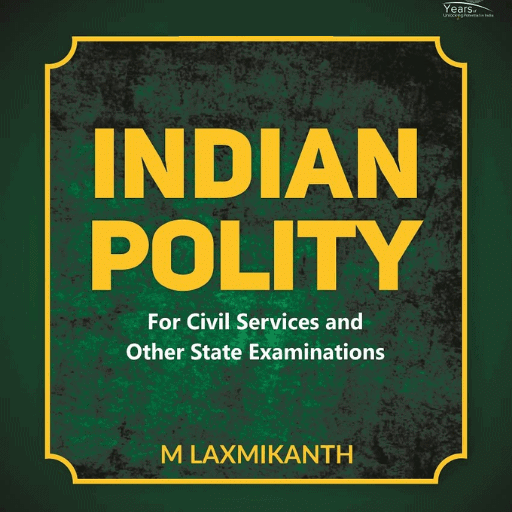
Laxmikanth for Indian Polity  Summaries  MCQs   videos
INFINITY COURSE

M. Laxmikanth Indian Polity Summaries, MCQs & Notes

197,636 students learning this week  ·  Last updated on Apr 07, 2026
Join for Free
The Laxmikanth for Indian Polity: Summaries, MCQs & videos course for UPSC on EduRev is a comprehensive resource for aspiring civil servants. This cou ... view more rse provides summaries, MCQs, and videos on Indian Polity, as covered in the renowned Laxmikanth book. Designed specifically for UPSC exam preparation, this course offers in-depth understanding of key concepts and includes practice questions to strengthen knowledge. With EduRev's trusted platform, students can access high-quality study materials and boost their chances of success in the UPSC exams.

M. Laxmikanth Indian Polity Summaries, MCQs Study Material

01
Laxmikanth for Indian Polity: Summaries, MCQs & videos
132 Videos  | 129 Docs | 70 Tests | 14 Subtopics

Trending Courses for UPSC

Why Laxmikanth is the Best Book for Indian Polity for UPSC Preparation

When it comes to preparing for the UPSC Civil Services Examination, Indian Polity is one of the most crucial subjects that determines your success. Among all the available resources, M. Laxmikanth's "Indian Polity" has established itself as the gold standard for UPSC aspirants across India. Published by McGraw Hill Education, this comprehensive book has helped lakhs of students crack one of the toughest competitive examinations in the country.

The reason Laxmikanth is considered the best Indian Polity book for UPSC lies in its depth, clarity, and structural organization. Unlike other books that provide superficial coverage, Laxmikanth goes into meticulous detail about every aspect of the Indian Constitution and governance system. The latest edition includes updates on constitutional amendments, including the 104th Constitutional Amendment Act, 2020, which extended reservation for SC/ST in Lok Sabha and State Assemblies till 2030, and the 105th Amendment Act, 2021, which restored states' power to identify OBCs.

For students appearing for UPSC 2026 and 2026, having the most recent edition is essential. The book's structured approach makes it ideal for both prelims and mains preparation, ensuring you don't miss any critical topics that examiners frequently ask about. Explore our Constitutional Framework chapter to understand the foundational concepts that will strengthen your entire preparation.

Understanding the Constitutional Framework of India Through Laxmikanth

The Indian Constitution is the world's longest written constitution, originally containing 395 Articles and 12 Schedules. Today, after numerous amendments, it has grown to 448 Articles. Understanding this framework is absolutely essential for UPSC preparation, and Laxmikanth breaks down these complex concepts into digestible sections.

The Constitutional Framework covers the historical background of how India's Constitution was drafted and adopted on 26th November 1949, coming into force on 26th January 1950. This section explains the Preamble, Fundamental Rights, Directive Principles of State Policy, and Fundamental Duties—all critical topics for both prelims and mains examinations.

Key Components of Constitutional Study

  • The Preamble and its significance in interpreting constitutional provisions
  • Fundamental Rights guaranteed to all citizens under Articles 12-35
  • Directive Principles of State Policy that guide legislative action
  • Fundamental Duties introduced by the 42nd Amendment
  • Constitutional amendments and their implications on governance

To get comprehensive video summaries and detailed explanations, check out our Video Summaries for Indian Polity by Laxmikanth, which provides visual learning resources perfect for quick revision before exams.

Complete Coverage of Parliamentary and Federal System in Indian Polity

India adopted a parliamentary system of government, borrowing heavily from the British Westminster model, while maintaining a federal structure with significant unitary features. This unique combination is what makes Indian governance distinctive, and understanding it thoroughly is crucial for UPSC success.

The parliamentary system means that the executive is drawn from and accountable to the legislature. India's federal system divides power between the central government and state governments, though with a strong center. The Constitution provides for a bicameral legislature at the union level: the Lok Sabha (House of the People) and the Rajya Sabha (Council of States).

Parliamentary System Features

  • Prime Minister as head of government and leader of majority party
  • Council of Ministers responsible to Parliament
  • President as ceremonial head of state
  • Separation of powers with legislative supremacy
  • Parliamentary privileges and immunities

Learn about how these systems function in practice through our detailed resource on System of Government: Parliamentary & Federal System, which covers the mechanisms that make Indian democracy work.

Central Government, Parliament and Judiciary: Key Concepts from Laxmikanth

The trinity of central governance—the President, Prime Minister, and Parliament—forms the backbone of Indian democracy. The President serves as the constitutional head of state, while real executive power rests with the Prime Minister and the Council of Ministers. Parliament comprises both houses and serves as the supreme legislative body.

The Indian judiciary, headed by the Supreme Court of India, functions as the apex judicial body and guardian of the Constitution. It has powers of judicial review, allowing it to strike down unconstitutional laws. Landmark doctrines like the Basic Structure Doctrine, established through the Kesavananda Bharati case in 1973, have fundamentally shaped constitutional interpretation in India.

Supreme Court and Constitutional Safeguards

The Supreme Court ensures that no amendment can violate the basic structure of the Constitution. This protection is crucial for maintaining constitutional integrity. Understanding how the judiciary works and its relationship with other organs of government is essential for UPSC mains answers.

For comprehensive insights into this critical topic, explore our Central Government, Parliament & Judiciary chapter that breaks down these complex relationships with clarity.

State Government Structure: Executive and Legislature Explained

While the Union Government receives significant attention, the State Government structure is equally important for UPSC preparation. Each state has its own executive headed by the Governor (constitutional head) and the Chief Minister (head of government), mirroring the union structure at the state level.

State Legislatures can be unicameral or bicameral, depending on the state. The legislative assembly (Vidhan Sabha) is the lower house, and some states also have an upper house called the legislative council (Vidhan Parishad). These state governments handle subjects like education, health, agriculture, and local administration under the concurrent and state lists of the Constitution.

State Executive Functions

  • Governor's role as constitutional figurehead and adviser to Chief Minister
  • Chief Minister's authority in state governance and legislative matters
  • State Cabinet composition and ministerial portfolios
  • Relationship between Governor and Chief Minister
  • State legislative processes and procedures

Get detailed coverage of these topics in our State Government: Executive & Legislatures chapter, which provides comprehensive information on how states function within India's federal framework.

Panchayati Raj and Local Government System for UPSC

The 73rd Constitutional Amendment Act, 1992 revolutionized local governance by granting constitutional status to Panchayati Raj Institutions. Similarly, the 74th Constitutional Amendment Act, 1992 did the same for urban local bodies (municipalities). These amendments represent India's commitment to grassroots democracy and decentralization.

The Panchayati Raj system operates at three levels: village (gram panchayat), block (block panchayat), and district (zilla parishad). Each level has elected representatives responsible for development activities in their respective areas. This system is critical for UPSC, as questions about local governance frequently appear in both prelims and mains.

LevelNomenclaturePrimary Functions
VillageGram PanchayatLocal development, welfare schemes, basic services
BlockBlock PanchayatCoordination, developmental planning
DistrictZilla ParishadDistrict-level planning and coordination

Understand the complete structure and functioning through our Local Government: Panchayati Raj & Municipality chapter, which covers everything from elected panchayat structure to municipal corporations.

Constitutional Bodies and Special Provisions for SC, ST and OBC

The Indian Constitution establishes several important bodies to protect constitutional values and ensure fair governance. The Election Commission of India conducts free and fair elections, the Union Public Service Commission (UPSC) recruits civil servants, and the Finance Commission recommends fiscal distribution between Union and States. The 16th Finance Commission has been constituted for 2026-2031.

Special provisions for Scheduled Castes, Scheduled Tribes, and Other Backward Classes are embedded in the Constitution to ensure social justice. The 103rd Constitutional Amendment Act, 2019 introduced 10% reservation for Economically Weaker Sections (EWS), expanding the reservation framework. Understanding these constitutional safeguards is essential for comprehensive UPSC preparation.

Major Constitutional Bodies

  • Election Commission of India—ensures democratic fairness
  • Union Public Service Commission—recruits officers at various levels
  • State Public Service Commissions—conduct state-level recruitment
  • Finance Commission—advises on financial distribution
  • National Commission for Scheduled Castes and Scheduled Tribes
  • Comptroller and Auditor General (CAG)—conducts financial audits

Explore comprehensive details in our Constitutional Bodies & Special Provisions for SC, ST & OBC chapter for in-depth knowledge of these institutions.

How to Use Laxmikanth Indian Polity Summaries Effectively

Simply reading Laxmikanth cover-to-cover isn't the most effective strategy. Instead, smart UPSC aspirants use structured summaries to understand concepts first and then dive deeper into specific topics. Chapter-wise summaries help you grasp the essence of each topic without getting lost in details during initial reading.

Study Strategy for Laxmikanth

  1. Start with video summaries to get an overview of the chapter
  2. Read the corresponding chapter from Laxmikanth for detailed understanding
  3. Make notes focusing on definitions and important dates
  4. Practice MCQs to test your understanding
  5. Revise using chapter summaries before exams

Access our structured Video Summaries for Indian Polity by Laxmikanth to streamline your learning process and save valuable preparation time.

Indian Polity MCQs for UPSC: Practice and Preparation Strategy

Multiple Choice Questions are the format for UPSC prelims, and practicing MCQs is absolutely essential for success. Indian Polity MCQs test your understanding of concepts, your memory of important facts, and your ability to distinguish between similar options. Regular practice with Indian Polity questions and answers develops the speed and accuracy needed to score well.

When practicing Indian Polity MCQs with answers, focus on understanding why each option is correct or incorrect, not just memorizing answers. This deep learning approach ensures you can handle similar questions with new contexts during the actual UPSC exam.

Practice Strategy for MCQs

  • Practice at least 50-75 MCQs daily after completing each chapter
  • Focus on previous year UPSC questions for authentic practice
  • Maintain a notebook of frequently confused concepts
  • Time yourself to improve speed—aim for 2 minutes per question
  • Review incorrect answers to identify knowledge gaps

Video Summaries and Visual Learning Resources for Indian Polity

Visual learning through video lectures has become increasingly important for UPSC preparation. Indian Polity videos help you understand complex concepts like federalism, separation of powers, and constitutional provisions through diagrams and clear explanations. The best video lectures for Indian Polity combine concept clarity with exam-focused content.

Chapter-wise videos enable you to study one topic at a time without feeling overwhelmed. Free Indian Polity videos available through EduRev provide professional-quality instruction without additional cost. These resources complement traditional reading and help accommodate different learning styles.

Leverage our comprehensive Video Summaries for Indian Polity by Laxmikanth as your primary visual learning resource for effective understanding.

Key Judgements and Constitutional Doctrines for UPSC Mains

UPSC mains questions, particularly in GS Paper II, frequently reference important Supreme Court judgements and constitutional doctrines. Understanding landmark cases like Kesavananda Bharati (Basic Structure Doctrine), Indira Sawhney (OBC Reservation), and Menoka Gandhi (Article 21 interpretation) is crucial for scoring well in mains examination.

These judgements shape how the Constitution is interpreted and applied in real governance. Knowledge of constitutional doctrines demonstrates maturity in your understanding and allows you to construct nuanced mains answers that examiners value.

Doctrine/CaseYearKey Contribution
Kesavananda Bharati1973Basic Structure Doctrine—limits constitutional amendments
Indira Sawhney1992Creamy Layer Concept for OBC reservation
Menoka Gandhi1978Expanded interpretation of Right to Life

Study all important judicial precedents through our Judgements and Doctrines chapter to strengthen your mains preparation significantly.

Free Study Materials and Resources for Indian Polity Preparation

Quality UPSC preparation doesn't always require expensive coaching or multiple resources. EduRev provides comprehensive free study materials including chapter summaries, MCQ collections, and video lectures for Indian Polity. These resources have been instrumental in helping thousands of students prepare effectively for the UPSC examination.

Make the most of available free resources by following a structured plan. Combine Laxmikanth's depth with our summaries for efficiency, practice MCQs for assessment, and watch videos for conceptual clarity. This holistic approach covering all learning modalities ensures comprehensive understanding.

Essential Free Resources to Explore

Successfully preparing for the UPSC examination requires dedication, smart study strategies, and quality resources. Laxmikanth's Indian Polity, combined with comprehensive summaries, MCQ practice, and video learning through EduRev, provides everything you need to master this crucial subject. Start your systematic preparation today and work towards securing your position in India's administrative services.

Laxmikanth for Indian Polity: Summaries, MCQs & videos for UPSC Exam Pattern 2026-2027

Laxmikanth for Indian Polity: Summaries, MCQs & Videos Exam Pattern for UPSC

When it comes to preparing for the Indian Polity section of the UPSC exam, one of the most trusted resources is the book "Indian Polity" by M. Laxmikanth. This comprehensive book covers all the important topics related to the Indian Constitution, governance, and political system. To make your preparation even more effective, EduRev offers summaries, MCQs, and videos based on this book.

Summaries:
EduRev provides concise summaries of each chapter in the book "Indian Polity" by M. Laxmikanth. These summaries highlight the key points and concepts, making it easier for you to revise and remember the important information. The summaries are written in a clear and concise manner, ensuring that you grasp the essential concepts without getting overwhelmed by excessive details.

MCQs:
To test your understanding and knowledge of the Indian Polity, EduRev offers a wide range of multiple-choice questions (MCQs) based on the topics covered in the book by M. Laxmikanth. These MCQs are designed to simulate the actual UPSC exam pattern and help you practice answering questions within a given time frame. By solving these MCQs, you can assess your level of preparation and identify areas that require further study.

Videos:
For visual learners, EduRev provides video lectures on the Indian Polity, which are based on the content of the book "Indian Polity" by M. Laxmikanth. These videos cover the important topics in a step-by-step manner, making it easier for you to understand complex concepts. The videos also include visual aids, diagrams, and examples to enhance your comprehension of the subject. By watching these videos, you can supplement your reading and gain a better understanding of the Indian Polity.

Exam Pattern for UPSC:
Understanding the exam pattern is crucial for effective preparation. The UPSC exam consists of three stages: the Preliminary examination (Objective type), the Main examination (Descriptive type), and the Personality Test (Interview). The Indian Polity section is an important part of both the Preliminary and Main examinations.

The Preliminary examination consists of multiple-choice questions with negative marking for incorrect answers. The Indian Polity section typically covers topics such as the historical background, making of the Constitution, fundamental rights and duties, parliamentary system, federalism, and more. It is essential to have a strong foundation in the Indian Polity to perform well in this section.

In the Main examination, the Indian Polity section is part of the General Studies paper. This section requires a deeper understanding of the Indian Constitution, governance, and political system. It includes questions that test your analytical and critical thinking abilities. It is important to study the Indian Polity in detail and be familiar with the key provisions of the Constitution to excel in this section.

In conclusion, EduRev's resources, including summaries, MCQs, and videos based on the book "Indian Polity" by M. Laxmikanth, are valuable tools for UPSC aspirants preparing for the Indian Polity section. These resources provide a comprehensive and structured approach to understanding the subject, thereby enhancing your chances of success in the UPSC exam.

Laxmikanth for Indian Polity: Summaries, MCQs & videos Syllabus 2026-2027 PDF Download

UPSC Laxmikanth for Indian Polity: Summaries, MCQs & Videos

1. UPSC Constitution of India
- Overview of the Indian Constitution
- Preamble and its significance
- Fundamental Rights and Duties
- Directive Principles of State Policy
- Amendment procedures

2. UPSC System of Government: Parliamentary & Federal System
- Features of a Parliamentary System
- Role and functions of the President
- Prime Minister and Council of Ministers
- Federalism in India
- Distribution of powers between the Centre and States

3. UPSC Central Government, Parliament & Judiciary
- Structure and functions of the Central Government
- Union Executive and Judiciary
- Parliament and its role in lawmaking
- Role of Supreme Court and High Courts

4. UPSC State Government: Executive & Legislatures
- Structure and functions of State Government
- Governor and Chief Minister
- State Executive and State Legislature
- Role of State Legislative Assembly and Council

5. UPSC Local Government: Panchayati Raj & Municipality
- Constitutional provisions for Local Government
- Panchayati Raj system and its features
- Municipalities and their functions
- Role of Local Government in grassroots development

6. UPSC Union Territories and Special Areas
- Classification and administration of Union Territories
- Special provisions for certain areas like Jammu and Kashmir, Nagaland, etc.
- Role and powers of Lieutenant Governor

7. UPSC Constitutional Bodies & Special Provisions for SC, ST & OBC
- Constitutional bodies like Election Commission, Finance Commission, etc.
- Special provisions for Scheduled Castes, Scheduled Tribes, and Other Backward Classes
- Reservation policies and their implementation

8. UPSC Non-Constitutional Bodies
- Non-constitutional bodies like National Human Rights Commission, National Commission for Women, etc.
- Their roles and functions in promoting welfare and protecting rights

9. UPSC Other Constitutional Dimensions
- Emergency provisions in the Constitution
- Constitutional provisions for minority rights
- Constitutional amendments and their significance

10. UPSC Political Dynamics
- Political parties and their role in the Indian political system
- Electoral system and voting patterns
- Coalition politics and its impact on governance

11. UPSC Working of the Constitution
- Interpretation of the Constitution by the judiciary
- Separation of powers and checks and balances
- Role of constitutional authorities in upholding the Constitution

12. UPSC Video Summaries for Indian Polity by Laxmikanth
- Summary videos by Laxmikanth covering important topics in Indian Polity
- Visual explanations and analysis of key concepts and provisions

Note: This syllabus is designed to cover the major topics and subtopics of Indian Polity for the UPSC examination. It provides a comprehensive understanding of the Indian Constitution, system of government, and various constitutional and non-constitutional bodies. The inclusion of video summaries by Laxmikanth enhances the learning experience and facilitates better comprehension of complex concepts.

This course is helpful for the following exams: UPSC, NDA, CDS

How to Prepare Laxmikanth for Indian Polity: Summaries, MCQs & videos for UPSC?

How to Prepare Laxmikanth for Indian Polity: Summaries, MCQs & Videos for UPSC?


Preparing for the Indian Polity section of the UPSC exam can be a daunting task, but with the right resources and study materials, it can become easier and more manageable. One such resource that is highly recommended for polity preparation is the course "Laxmikanth for Indian Polity: Summaries, MCQs & Videos" offered by EduRev.

Why Choose the Laxmikanth for Indian Polity Course?


1. Comprehensive Summaries: The course provides comprehensive summaries of every chapter in the Laxmikanth book on Indian Polity. These summaries are concise, yet cover all the important points, making it easier to revise and retain the information.

2. Extensive MCQs: The course includes a wide range of multiple-choice questions (MCQs) that cover various topics from the Laxmikanth book. These MCQs help in testing your understanding of the concepts and also familiarize you with the exam pattern.

3. Video Lectures: The course offers video lectures that provide detailed explanations of important topics from the Laxmikanth book. These video lectures make the learning process more engaging and interactive, helping you grasp the concepts better.

4. Time-Saving: By providing comprehensive summaries, MCQs, and video lectures, this course saves you time and effort in gathering study materials from different sources. Everything you need for polity preparation is available in one place, making it convenient and efficient.

Tips for Effective Preparation:


1. Start Early: Begin your preparation well in advance to allow yourself enough time to cover all the topics thoroughly.

2. Understand the Syllabus: Familiarize yourself with the UPSC syllabus for Indian Polity and identify the specific chapters from Laxmikanth that you need to focus on.

3. Follow a Study Plan: Create a study plan that includes regular revision of the summaries, solving MCQs, and watching video lectures. Stick to the plan to ensure consistent progress.

4. Practice Previous Year Questions: Solve previous year UPSC questions related to Indian Polity to get a better understanding of the exam pattern and to identify the important topics.

5. Join Discussion Groups: Participate in online discussion forums or join study groups to interact with fellow aspirants and discuss doubts or clarifications related to Indian Polity.

6. Revise Regularly: Regular revision is key to retaining the information. Allocate time for revision in your study plan and revise the summaries, MCQs, and important concepts frequently.

7. Take Mock Tests: Practice mock tests to assess your preparation level and identify areas that need improvement. Analyze your performance in these tests to focus on weak areas.

In conclusion, the "Laxmikanth for Indian Polity: Summaries, MCQs & Videos" course offered by EduRev is a valuable resource for UPSC aspirants to prepare for the Indian Polity section. By following effective preparation strategies and utilizing the comprehensive study materials provided in this course, you can enhance your chances of success in the UPSC exam.

Importance of Laxmikanth for Indian Polity: Summaries, MCQs & videos for UPSC

Importance of Laxmikanth for Indian Polity: Summaries, MCQs & Videos Course for UPSC


Laxmikanth for Indian Polity: Summaries, MCQs & Videos is a comprehensive course offered by EduRev that is specifically designed to help UPSC aspirants in their preparation for the Indian Polity section of the examination. This course is highly beneficial for candidates as it provides detailed summaries, multiple-choice questions (MCQs), and video lectures, all of which are essential for a thorough understanding and revision of the subject.


Key Features of the Course:


  • Summaries: The course includes concise summaries of each chapter of the Laxmikanth book, which is widely regarded as the go-to resource for Indian Polity preparation. These summaries condense the information into easily digestible chunks, making it easier for students to revise and retain important concepts.

  • MCQs: The course provides a vast collection of MCQs that cover every topic and concept mentioned in the Laxmikanth book. These MCQs not only help in testing the knowledge acquired but also aid in improving problem-solving skills and time management, both of which are crucial for the UPSC examination.

  • Videos: The course offers video lectures on various topics related to Indian Polity, presented by expert educators. These videos provide a dynamic learning experience, as they explain complex concepts in a simplified manner, making it easier for students to grasp and remember the information.


Benefits of the Course:


The Laxmikanth for Indian Polity: Summaries, MCQs & Videos Course for UPSC has several advantages for UPSC aspirants:


  • Comprehensive Coverage: The course covers all the important topics and concepts mentioned in the Laxmikanth book, ensuring that candidates have a thorough understanding of the subject.

  • Time-saving: The summaries provided in the course help in saving time by condensing the vast amount of information into easily readable content.

  • Effective Revision: The MCQs and video lectures assist in effective revision by providing opportunities for practice and reinforcing the learned concepts.

  • Improved Performance: The comprehensive coverage, practice through MCQs, and visual learning through videos contribute to improved performance in the Indian Polity section of the UPSC examination.


The Laxmikanth for Indian Polity: Summaries, MCQs & Videos Course for UPSC offered by EduRev is a valuable resource for UPSC aspirants seeking to enhance their knowledge and understanding of Indian Polity. With its concise summaries, extensive collection of MCQs, and informative video lectures, this course provides an effective and efficient way to prepare for the Indian Polity section of the UPSC examination.

Laxmikanth for Indian Polity: Summaries, MCQs & videos for UPSC FAQs

1. What are the main topics covered in Laxmikanth Indian Polity for UPSC preparation?
Ans. Laxmikanth's Indian Polity textbook covers the Constitution structure, fundamental rights, directive principles, parliamentary system, executive powers, judiciary, federalism, and constitutional amendments. It includes detailed explanations of Articles and Schedules, making it essential for UPSC aspirants. The book also addresses centre-state relations, local governance, and election commission functions comprehensively.
2. How should I study Laxmikanth for UPSC to score maximum marks in polity questions?
Ans. Focus on understanding constitutional provisions rather than memorising. Create chapter-wise notes highlighting key Articles and their implications. Practice MCQ tests regularly to identify weak areas. Combine Laxmikanth summaries with case studies for prelims and mains preparation. Revise repeatedly, linking polity concepts to current affairs and previous year UPSC questions for better retention and application.
3. What is the difference between Fundamental Rights and Directive Principles in Indian Constitution according to Laxmikanth?
Ans. Fundamental Rights are legally enforceable citizen entitlements under Articles 12-35, protecting individual liberties through court intervention. Directive Principles, outlined in Articles 36-51, are non-enforceable government guidelines for policy-making emphasising social and economic justice. While rights are justiciable and immediate, principles are aspirational and binding on state action indirectly through legislation and governance decisions.
4. How many Articles and Schedules are in the Indian Constitution that UPSC asks about?
Ans. The Indian Constitution contains 470 Articles (originally 395) and 12 Schedules covering governance, rights, and administrative procedures. UPSC frequently tests knowledge of key Articles like 1, 12, 32, 44, 73-78, and 226-227 across prelims and mains. Understanding Article frameworks and Schedule contents-especially Fifth and Sixth Schedules on tribal areas-is critical for comprehensive polity mastery.
5. What are the powers and functions of the President under Indian Constitution as per Laxmikanth?
Ans. The President holds executive, legislative, and judicial powers as India's ceremonial head of state. Executive powers include appointment of ministers, judges, and constitutional officials. Legislative authority covers bill assent, ordinance promulgation, and message delivery to Parliament. Judicial functions include mercy petition consideration. However, these powers are exercised on Prime Minister's advice, making the President's role largely constitutional rather than practical.
6. How does the parliamentary system work in India according to Indian Polity notes?
Ans. India's parliamentary system operates through bicameral legislature: Lok Sabha (lower house) and Rajya Sabha (upper house). The executive-Prime Minister and cabinet-is accountable to Parliament through confidence votes and question hours. Legislation requires both chambers' approval. The President acts on ministerial advice. This system ensures democratic accountability, separation of powers, and checks-and-balances, differentiating India from presidential systems like the USA.
7. What is federalism in Indian Constitution and how does it differ from unitary structure?
Ans. Indian federalism divides powers between Union and State governments through Articles 245-263, creating a quasi-federal system. Union List (98 subjects), State List (59 subjects), and Concurrent List (52 subjects) define jurisdiction. Unlike unitary systems where central authority dominates, Indian federalism permits state autonomy in education, health, and policing. However, emergency provisions temporarily shift power to the Centre, making India's federalism flexible.
8. Which Articles cover the electoral system and voting rights in Indian Polity for UPSC?
Ans. Articles 326-329 establish India's electoral framework guaranteeing universal adult suffrage and equal voting rights. Article 324 creates the Election Commission as an independent body. Articles 82-83 define delimitation and constituency formation. UPSC emphasises Election Commission powers regarding conduct, fairness, and dispute resolution. Knowledge of voter eligibility criteria, electoral processes, and constitutional safeguards against malpractices is essential for prelims and mains success.
9. What are the key constitutional amendments students must know for UPSC polity exam preparation?
Ans. Critical amendments include the 42nd Amendment (emergency powers restructuring), 73rd and 74th (local governance decentralisation), 44th (property rights removal from fundamental rights), and recent amendments like 103rd (OBC reservation). UPSC regularly tests amendment purposes, impacts on constitutional structure, and judicial interpretations. Understanding amendment procedures under Article 368 and landmark amendments' historical context strengthens both prelims objective answers and mains analytical essays.
10. How can I effectively use MCQ tests and videos to master Laxmikanth Indian Polity chapters?
Ans. Use MCQ tests to identify knowledge gaps in specific chapters like federalism or amendment processes. Videos provide visual explanations of complex concepts such as separation of powers and constitutional hierarchy. EduRev offers comprehensive MCQ tests, detailed video lectures, and chapter summaries aligned with Laxmikanth content. Practice tests after studying each topic reinforce retention, build confidence, and simulate UPSC prelims exam patterns accurately.
Course Description
Laxmikanth for Indian Polity: Summaries, MCQs & videos for UPSC 2026-2027 is part of UPSC preparation. The notes and questions for Laxmikanth for Indian Polity: Summaries, MCQs & videos have been prepared according to the UPSC exam syllabus. Information about Laxmikanth for Indian Polity: Summaries, MCQs & videos covers all important topics for UPSC 2026-2027 Exam. Find important definitions, questions, notes,examples, exercises test series, mock tests and Previous year questions (PYQs) below for Laxmikanth for Indian Polity: Summaries, MCQs & videos.
Preparation for Laxmikanth for Indian Polity: Summaries, MCQs & videos in English is available as part of our UPSC preparation & Laxmikanth for Indian Polity: Summaries, MCQs & videos in Hindi for UPSC courses. Download more important topics related with Laxmikanth for Indian Polity: Summaries, MCQs & videos, notes, lectures and mock test series for UPSC Exam by signing up for free.
Course Speciality
Laxmikanth for Indian Polity: Summaries, MCQs & videos
Laxmikanth for Indian Polity: Summaries, MCQs & videos course offering 100+ video lectures & more, covering complete syllabus & important topics, created by experts. Joined by 1976k+ students.
Course Options
View your Course Analysis
Create your own Test
Related Exams
Laxmikanth for Indian Polity  Summaries  MCQs   videos
Laxmikanth for Indian Polity: Summaries, MCQs & videos
Join course for Free
THIS COURSE INCLUDES:
Videos
130+
Documents
120+
Tests
70+
Ratings
4.92 (794+)
Get this course, and all other courses for UPSC with EduRev Infinity Package.
Explore Courses for UPSC exam
Signup for Free!
Signup to see your scores go up within 7 days! Learn & Practice with 1000+ FREE Notes, Videos & Tests.
10M+ students study on EduRev

Course Speciality

Laxmikanth for Indian Polity: Summaries, MCQs & videos
Laxmikanth for Indian Polity: Summaries, MCQs & videos course offering 100+ video lectures & more, covering complete syllabus & important topics, created by experts. Joined by 1976k+ students.






