Prepare for
IGCSE Grade 10 Exam
with EduRev
IGCSE Grade 10 syllabus


All Courses for IGCSE Grade 10


Physics for GCSE/IGCSE
Computer for GCSE/IGCSE
Mathematics for GCSE/IGCSE
Biology for GCSE/IGCSE
English Language for GCSE/IGCSE
Chemistry for GCSE/IGCSE
Economics for GCSE/IGCSE
History for GCSE/IGCSE
Business Studies for GCSE/IGCSE
Geography for GCSE/IGCSE
Accounting for GCSE/IGCSE
Science Class 10
Mathematics (Maths) Class 10
Social Studies (SST) Class 10
Past Year Papers for Class 10
English Class 10
Chapter Notes for Class 10
English Grammar Advanced
Practice Questions with Solutions for Class 10
Hindi Class 10
Worksheets with Solutions for Class 10
CBSE Sample Papers For Class 10
Online MCQ Tests for Class 10
6 Months Boards Preparation for Class 10 (CBSE)
English Grammar Basic
Crash Course: Class 10
Cursive Writing Course-Improve Your Handwriting
Mathematics Class 10 ICSE
Physics Class 10 ICSE
Improve Your Calculations: Vedic Maths (English)
PPTs for Class 10
Chemistry Class 10 ICSE
Artificial Intelligence for Class 10
Calligraphy Course: Beginner to Advanced
Mental Maths
ChatGPT for Everything: How to Use ChatGPT?
Biology Class 10 ICSE
Canva for Beginners
Exploring the World of Harry Potter
Hand Written Notes for Class 10 ICSE
History and Civics Class 10 ICSE
How To Prepare For Class 10
Class 10 Maharashtra SSC Board All Subjects
Artificial Intelligence for Class 10
How to become an Expert of MS Excel
Daily GK & Current Affairs Tests
Hindi Class 10 ICSE
30 Days Revision for Class 10
English Class 10 ICSE
हिंदी व्याकरण
Chess Tutorial Course: Beginner to Advanced
Grammar for German
Powerpoint: Become an Expert
संस्कृत कक्षा 10 (Sanskrit Class 10)
Olympiad Preparation for Class 10
Unit Tests for Class 10
Cooking Basics for Teens
Learn German (Hallo Deutsch 2)
How to become an Expert of MS Word
Lakhmir Singh & Manjit Kaur Solutions: Class 10 Science
Worksheets for ICSE Class 10
Solve Like a Pro: Rubik Cube Tutorials
Revision Resources for Class 10
The Ultimate Violin Course: From Beginner to Advanced
Core Skills
Psychology 101: The Why Behind Everything You Do
French (Class 10) - Notes & Videos
Robotics Workshop for kids
Piano Tutorials Course: Beginners to Advance
General Knowledge Encyclopedia
ICSE Class 10 Sample Papers
Geography Class 10 ICSE
Communicative English for Class 10
Mind Maps for Class 10
Weekly Tests for Class 10 Preparation
Become a YouTube Creator
Computer Application: Class 10
Subjectwise and Chapter Timetable for Class 10
Mahabharat Tales: The Battle of Good and Evil
ICSE Class 10 Previous Year Papers
NCERT Textbooks & Solutions for Class 10
Vedic Mathematics
Graphic Designing
The Ultimate Guitar Course: From Beginner to Advanced
Basic Creativity Tutorials
Half Yearly and Final Exam Papers for Class 10
Main Course (Communicative English) Book Class 10
Mnemonics for Class 10
Canva for Everyone: Design Like a Pro
Short Film Making for Beginners
Speed Reading & Memory Techniques for Students
Pixel Perfection: Creating & Editing Pictures with Photoshop
Important Tips for Exam Preparation
Daily Meditation Practices for Students
NTSE for Class 10
Amazing Animation Tutorials: Basics to Advanced
Master Sudoku: From Beginner to Expert
Mental Health & Mindfulness for Students
Cyber Olympiad for Class 10
Information & Computer Technology (Class 10) - Notes & Video
French for Class 10
How to Speak with Confidence & Clarity in 6 Weeks
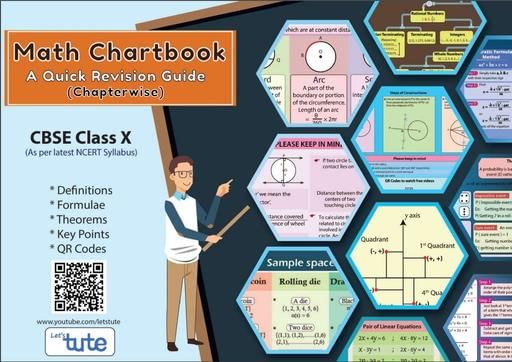
Mathematics Chart book: Revision guide
Science Project Ideas for Students
International Mathematics Olympiad (IMO) for Class 10
Complete Vocal Training– Beginner to Performer
Science Olympiad for Class 10
iOS App Development for Beginners
Spanish: Beginner A1 Level
Nutrition Basics for Students
Short & Long Answer Questions for Class 10
Answer Writing Guide for Board Exam
DIY Science Fun: Cool School Projects
Stock Market Basics for Beginners
The Complete SAT Course
HTML for Junior Classes
Marvel Through Time: A Journey Across Universes
English Olympiad for Class 10
No-Code App Building: From Beginner to Advanced
Ukulele Foundations: Beginner to Advanced
Data Literacy for Students: Excel, Charts & Insights
CSS for Beginners
Monthly Science & Tech Updates
Flashcards for Class 10
Economics Class 10 ICSE
Spanish: Elementary A2 Level
Playing Drums: Step-by-Step Course
The Legendary Tale of Ramayan: Heroes, Villains, and Divine
Commercial Applications
Internet Safety
Design Thinking
The Grand Saga of Gita : Krishna's Guidance for Life
C++ Programming for Beginners
Android App Development for Beginners
Photoshop: Become an Expert
C Programming for Beginners
Money Management for Students: Save, Budget & Spend Wisely





















































IGCSE for IGCSE Grade 10
Main Subjects for IGCSE Grade 10
Practice for IGCSE Grade 10
Past Year Papers for Class 10
Practice Questions with Solutions for Class 10
Worksheets with Solutions for Class 10
CBSE Sample Papers For Class 10
Online MCQ Tests for Class 10
Unit Tests for Class 10
Lakhmir Singh & Manjit Kaur Solutions: Class 10 Science
Weekly Tests for Class 10 Preparation
NCERT Textbooks & Solutions for Class 10
Half Yearly and Final Exam Papers for Class 10
Short & Long Answer Questions for Class 10
Revision for IGCSE Grade 10
Grammar for IGCSE Grade 10
Skill Building for IGCSE Grade 10
Cursive Writing Course-Improve Your Handwriting
Improve Your Calculations: Vedic Maths (English)
Calligraphy Course: Beginner to Advanced
Mental Maths
ChatGPT for Everything: How to Use ChatGPT?
Canva for Beginners
Exploring the World of Harry Potter
How to become an Expert of MS Excel
Daily GK & Current Affairs Tests
Chess Tutorial Course: Beginner to Advanced
Powerpoint: Become an Expert
Cooking Basics for Teens
How to become an Expert of MS Word
Solve Like a Pro: Rubik Cube Tutorials
The Ultimate Violin Course: From Beginner to Advanced
Core Skills
Psychology 101: The Why Behind Everything You Do
Robotics Workshop for kids
Piano Tutorials Course: Beginners to Advance
General Knowledge Encyclopedia
Become a YouTube Creator
Mahabharat Tales: The Battle of Good and Evil
Vedic Mathematics
Graphic Designing
The Ultimate Guitar Course: From Beginner to Advanced
Basic Creativity Tutorials
Canva for Everyone: Design Like a Pro
Short Film Making for Beginners
Speed Reading & Memory Techniques for Students
Pixel Perfection: Creating & Editing Pictures with Photoshop
Daily Meditation Practices for Students
Amazing Animation Tutorials: Basics to Advanced
Master Sudoku: From Beginner to Expert
Mental Health & Mindfulness for Students
Science Project Ideas for Students
Complete Vocal Training– Beginner to Performer
iOS App Development for Beginners
Nutrition Basics for Students
DIY Science Fun: Cool School Projects
Stock Market Basics for Beginners
HTML for Junior Classes
Marvel Through Time: A Journey Across Universes
No-Code App Building: From Beginner to Advanced
Ukulele Foundations: Beginner to Advanced
Data Literacy for Students: Excel, Charts & Insights
CSS for Beginners
Playing Drums: Step-by-Step Course
The Legendary Tale of Ramayan: Heroes, Villains, and Divine
Commercial Applications
Internet Safety
Design Thinking
The Grand Saga of Gita : Krishna's Guidance for Life
C++ Programming for Beginners
Android App Development for Beginners
Photoshop: Become an Expert
C Programming for Beginners
Money Management for Students: Save, Budget & Spend Wisely
ICSE for IGCSE Grade 10
Mathematics Class 10 ICSE
Physics Class 10 ICSE
Chemistry Class 10 ICSE
Biology Class 10 ICSE
Hand Written Notes for Class 10 ICSE
History and Civics Class 10 ICSE
Hindi Class 10 ICSE
English Class 10 ICSE
Worksheets for ICSE Class 10
ICSE Class 10 Sample Papers
Geography Class 10 ICSE
ICSE Class 10 Previous Year Papers
Economics Class 10 ICSE
Other Subjects for IGCSE Grade 10
Artificial Intelligence for Class 10
Artificial Intelligence for Class 10
Grammar for German
संस्कृत कक्षा 10 (Sanskrit Class 10)
Learn German (Hallo Deutsch 2)
French (Class 10) - Notes & Videos
Computer Application: Class 10
Information & Computer Technology (Class 10) - Notes & Video
French for Class 10
Spanish: Beginner A1 Level
Spanish: Elementary A2 Level
Strategy for IGCSE Grade 10
Guided Learning for IGCSE Grade 10
Olympiads for IGCSE Grade 10
Reference Books for IGCSE Grade 10






| Why students choose EduRev for their IGCSE Grade 10 Exam |
4.6
 (150K+ ratings)
|
 (150K+ ratings)

What Is IGCSE Grade 10 and Why Is It Globally Recognized?
The International General Certificate of Secondary Education (IGCSE) is one of the most respected secondary school qualifications in the world. Administered by Cambridge Assessment International Education (CAIE) - a part of the University of Cambridge - the Cambridge IGCSE Grade 10 is designed for students typically between the ages of 14 and 16.
What makes IGCSE truly stand out is its global acceptance. Universities, employers, and educational institutions in more than 160 countries recognize this qualification, including top institutions in the US, UK, Australia, Canada, and increasingly across India and Asia. For Indian students studying at international schools or planning to pursue higher education abroad, IGCSE Grade 10 serves as a powerful academic credential.
The curriculum builds not just subject knowledge, but also critical thinking, problem-solving, and independent learning - skills that top universities look for in applicants. After completing IGCSE, students can progress to Cambridge AS & A Levels, the International Baccalaureate (IB), or other pre-university programs.
Best IGCSE Grade 10 Subjects: Core Courses Every Student Should Know
One of the biggest advantages of the Cambridge IGCSE is its flexibility. Students can choose between 5 and 14 subjects from over 70 options, organized into broad groups: Languages, Humanities and Social Sciences, Sciences, Mathematics, and Creative and Professional subjects. Here's a quick look at the most popular IGCSE subjects:
| Subject Group | Key IGCSE Subjects | Syllabus Code |
|---|---|---|
| Sciences | Physics, Chemistry, Biology | 0625, 0620, 0610 |
| Mathematics | Mathematics, International Mathematics | 0580, 0607 |
| Languages | English Language (First/Second) | 0500, 0510 |
| Humanities | Geography, History, Economics | 0460, 0470, 0455 |
| Professional | Business Studies, Computer Science, Accounting | 0450, 0478, 0452 |
Many IGCSE subjects are offered at two tiers - Core and Extended - allowing students of different ability levels to access the curriculum. The Extended tier covers a broader and deeper range of content, which is ideal for students aiming for top grades.
IGCSE vs CBSE vs ICSE: Which Board Is the Best Fit for Grade 10 Students?
This is one of the most common questions Indian parents and students ask when choosing a curriculum for Class 10. Here's a straightforward comparison to help you decide:
| Feature | IGCSE | CBSE | ICSE |
|---|---|---|---|
| Administered By | Cambridge (CAIE) | Central Board (India) | CISCE (India) |
| Global Recognition | 160+ countries | Primarily India | Primarily India |
| Curriculum Style | Skill & application-based | Concept-focused | Comprehensive & detailed |
| Best For | Students targeting global universities | Engineering/Medical entrance aspirants | Strong academic foundation |
If you're appearing for any of these boards, EduRev offers dedicated resources. You can explore Science Class 10 and Mathematics (Maths) Class 10 for CBSE, and Physics Class 10 ICSE, Chemistry Class 10 ICSE, and Biology Class 10 ICSE for ICSE board preparation.
How to Prepare for IGCSE Grade 10 Exams: Proven Study Strategies
Scoring high in IGCSE Grade 10 requires a smart, structured approach. Here are preparation tips that actually work:
- Understand the syllabus thoroughly - Know the Core vs. Extended content for each subject before you start studying.
- Create a timetable - Allocate time across subjects based on difficulty. Don't ignore weaker areas.
- Practise past papers regularly - IGCSE past papers are one of the best ways to get comfortable with the style and depth of questions.
- Focus on application - IGCSE tests how you apply concepts, not just memorise them. Practise data interpretation and analytical questions.
- Revise consistently - Last-minute cramming doesn't work for IGCSE. Build revision into your weekly schedule from the start.
For structured guidance on exam preparation, check out Important Tips for Exam Preparation and How To Prepare For Class 10 on EduRev. Students looking for a focused sprint can also benefit from the Crash Course: Class 10.
Top Online Courses for IGCSE Grade 10 in Physics, Chemistry, and Mathematics
The science and mathematics subjects in IGCSE Grade 10 demand a solid conceptual foundation along with plenty of practice. EduRev offers well-structured IGCSE online courses for each of these subjects:
- Physics for GCSE/IGCSE - Covers mechanics, waves, electricity, magnetism, thermal physics, and atomic physics aligned with Cambridge syllabus 0625.
- Chemistry for GCSE/IGCSE - Includes atomic structure, bonding, stoichiometry, organic chemistry, and chemical reactions (syllabus 0620).
- Mathematics for GCSE/IGCSE - Covers number, algebra, geometry, statistics, and probability for IGCSE Maths Grade 10.
To sharpen your calculation speed - an important skill for IGCSE Maths - you can explore Improve Your Calculations: Vedic Maths and Mental Maths. For a deeper mathematical approach, Vedic Mathematics is also available.
Essential Study Resources for IGCSE Biology, Geography, and Economics
Beyond the core sciences, IGCSE Science Grade 10 and humanities subjects also need dedicated preparation. Here are the key resources available on EduRev:
- Biology for GCSE/IGCSE - Covers cell biology, genetics, ecology, human physiology, and plant biology (syllabus 0610).
- Geography for GCSE/IGCSE - Physical and human geography themes under syllabus 0460.
- Economics for GCSE/IGCSE - Covers microeconomics and macroeconomics concepts aligned with Cambridge syllabus 0455.
- History for GCSE/IGCSE - World history themes and depth studies (syllabus 0470).
- Business Studies for GCSE/IGCSE - Business activity, marketing, finance, and operations under syllabus 0450.
- Computer for GCSE/IGCSE - Computational thinking, programming, networks, and data representation (syllabus 0478).
- Accounting for GCSE/IGCSE - Financial accounting principles under Cambridge syllabus 0452.
- English Language for GCSE/IGCSE - Reading, writing, and communication skills for IGCSE English Language.
For students also preparing across Indian boards, EduRev provides Social Studies (SST) Class 10, English Class 10, Hindi Class 10, and Sanskrit Class 10 resources as well.
Best Practice Papers and Revision Techniques for IGCSE Grade 10 Success
Consistent practice and smart revision are the twin pillars of IGCSE Grade 10 success. EduRev has a wide range of resources to help you consolidate learning and identify gaps before the exam:
- Past Year Papers for Class 10 - Practise with actual past papers to familiarise yourself with question patterns.
- CBSE Sample Papers For Class 10 and ICSE Class 10 Sample Papers - Useful for students appearing across different boards.
- Practice Questions with Solutions for Class 10 - Step-by-step solutions help you understand where you went wrong.
- Online MCQ Tests for Class 10 - Quick tests to build speed and accuracy.
- 30 Days Revision for Class 10 - A structured last-month plan to cover all key topics systematically.
- Revision Resources for Class 10 - Comprehensive notes and tools for final revision.
- Chapter Notes for Class 10 and PPTs for Class 10 - Great for visual learners who prefer structured summaries.
- Worksheets with Solutions for Class 10 and Worksheets for ICSE Class 10 - Targeted practice for every chapter.
- 6 Months Boards Preparation for Class 10 (CBSE) - Ideal for students who want to start preparation early.
- Hand Written Notes for Class 10 ICSE and Class 10 Maharashtra SSC Board All Subjects - Board-specific resources for comprehensive coverage.
Skill-Building Courses That Give IGCSE Grade 10 Students a Competitive Edge
IGCSE Grade 10 students benefit enormously from developing skills beyond the core curriculum. Whether you're looking to strengthen your English, explore technology, or discover a new hobby, EduRev has a wide selection of skill courses:
- Language Skills: English Grammar Advanced, English Grammar Basic, Communicative English for Class 10, English Class 10 ICSE, French (Class 10) - Notes & Videos, Learn German (Hallo Deutsch 2), हिंदी व्याकरण, and Hindi Class 10 ICSE.
- Technology & Creativity: Artificial Intelligence for Class 10, AI for Class 10 (Advanced), ChatGPT for Everything, How to become an Expert of MS Excel, Powerpoint: Become an Expert, and Canva for Beginners.
- Writing & Expression: Calligraphy Course: Beginner to Advanced and Cursive Writing Course - Improve Your Handwriting.
- Hobbies & Wellness: The Ultimate Guitar Course: From Beginner to Advanced, Chess Tutorial Course: Beginner to Advanced, Robotics Workshop for Kids, and Daily Meditation Practices for Students.
- General Knowledge & More: Daily GK & Current Affairs Tests, General Knowledge Encyclopedia, Olympiad Preparation for Class 10, Core Skills, Mathematics Class 10 ICSE, History and Civics Class 10 ICSE, Psychology 101, Exploring the World of Harry Potter, and Marvel Through Time.
Building a well-rounded profile through skill courses is increasingly valued by international universities, and these courses on EduRev make it genuinely accessible. Whether your goal is to secure top grades in Cambridge IGCSE Grade 10 or develop skills that set you apart, starting your preparation early and using the right study material makes all the difference.
IGCSE Grade 10 FAQs
| 1. How do you write a good essay for IGCSE Grade 10 exams? |  |
| 2. What's the difference between IGCSE and CBSE curriculum for Grade 10 students? | |
| 3. How do I prepare for IGCSE Grade 10 maths when I'm really struggling? | |
| 4. What should my study schedule look like for IGCSE exams in Grade 10? | |
| 5. How do I remember all the dates and events for IGCSE history revision? | |
| 6. What are the best tips for managing exam anxiety before IGCSE Grade 10 tests? | |
| 7. How do I write answers that actually get full marks in IGCSE science papers? | |
| 8. What's the smartest way to revise English literature for IGCSE Grade 10? | |
| 9. How do I balance studying for multiple IGCSE subjects without burning out? | |
| 10. What should I focus on in the final two weeks before my IGCSE Grade 10 exams? | |

One subscription to unlock all
IGCSE Grade 10 Courses
View Pricing Plans
Starting @ $1 per month
|
|


