NCERT Solutions: Tribes, Nomads and Settled Communities

Let's Recall
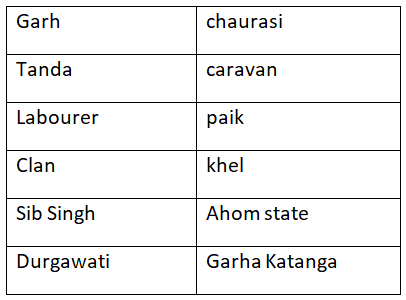
Q1. Match the following:
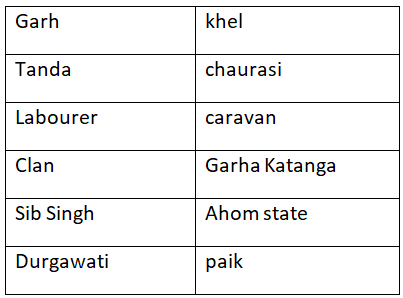
Ans:
Q2. Fill in the blanks:
Ans (a) The new castes emerging within varnas were called jatis.
(b) Buranjis were historical works written by the Ahoms.
(c) The Akbar Nama mentions that Garha Katanga had 70,000 villages.
(d) As tribal states grew stronger, they gave land grants to poets and scholars.
Q3. State whether true or false:
Ans: (a) Tribal societies had rich oral traditions.
Ans: True
(b) There were no tribal communities in the northwestern part of the subcontinent.
Ans: False
(c) The chaurasi in Gond states contained several cities.
Ans: False
(d) The Bhils lived in the north-eastern part of the subcontinent.
Ans: False
Q4. What kinds of exchanges took place between nomadic pastoralists and settled agriculturists?
Ans: Nomadic pastoralists travelled long distances with their animals, relying on milk and other pastoral products for sustenance. They engaged in various exchanges with settled agriculturists, which included:
- Exchanging wool and ghee for essential goods.
- Trading for grain, cloth, and utensils.
- Bartering for other products that met their needs.
Let's Understand
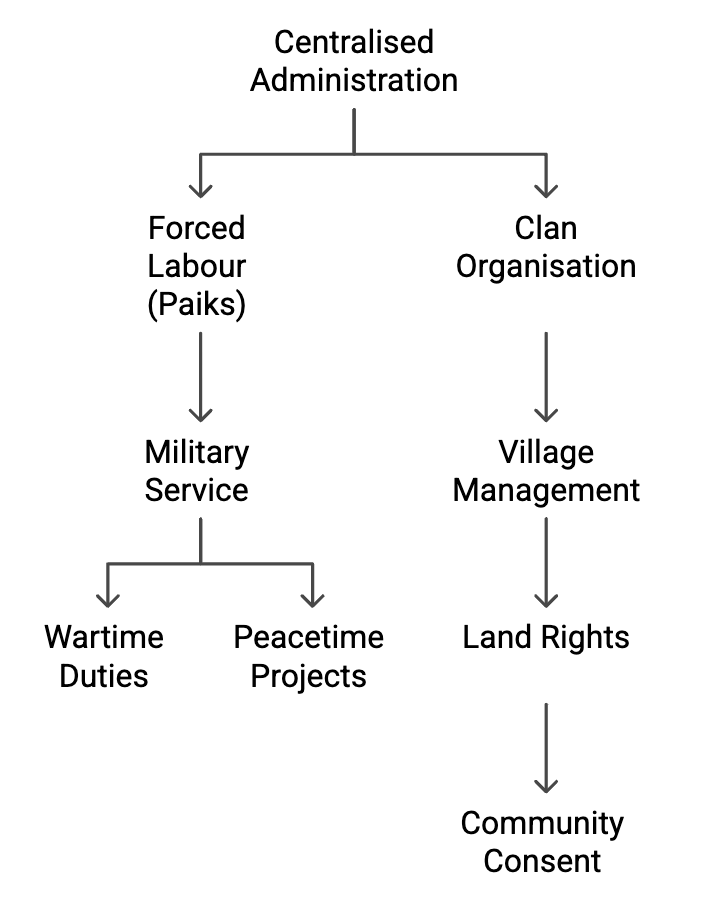
Q5. How was the administration of the Ahom state organised?
Ans: The Ahom administration had key features:
- Centralisation: Became more centralised by the early 1600s.
- Forced Labour (Paiks): Relied on paik labor for various tasks.
- Military Service: Adult males served in wars and worked on public projects.
- Clans & Villages: Society was organised into khels managing multiple villages.
- Land Rights: Peasants held land collectively, protected from royal seizure.

Q6. What changes took place in varna-based society?
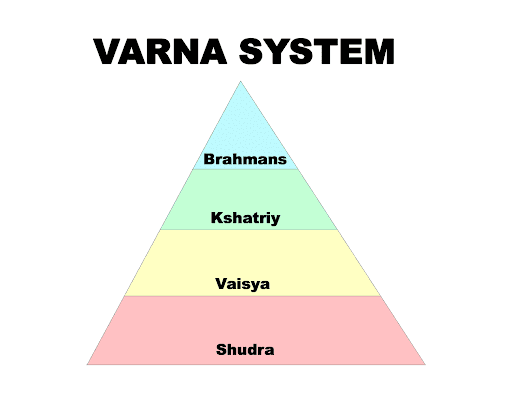
Ans: Social changes occurred in the varna-based society, leading to the formation of different groups known as jatis. Key developments include:
- New castes emerged within the main varnas.
- Jatis became the primary means of organising society, replacing the traditional varna system.
- Skilled workers, such as craftsmen, blacksmiths, carpenters, and masons, were recognised as distinct jatis by the Brahmanas.
 For example, a twelfth-century inscription from Uyyakondan Udaiyar in Tamil Nadu details discussions among Brahmanas regarding the status of the rathakaras (chariot makers).
Q7. How did tribal societies change after being organised into a state?
Ans: Tribal societies changed after being organized into a state in the following ways:
- Brahmanas helped integrate many tribes into the caste system.
- Leading tribal families joined the ruling class, while others became part of lower jatis.
- In regions like Punjab, Sindh, and the North-West Frontier, powerful tribes adopted Islam and rejected the caste system.
- The Gonds, who practiced shifting cultivation in Gondwana, were divided into clans led by their own raja. As Delhi Sultanate power declined, some Gond kingdoms grew stronger but faced conflicts with larger kingdoms.
Let's Discuss
Q8. Were the Banjaras important for the economy?
Ans: The Banjaras played a vital role in the economy due to their activities as nomadic traders. Here are some key points about their importance:
- They were the primary nomadic traders in India.
- They transported grain to city markets, buying it where it was cheaper and selling it in areas where it was more expensive.
- Large merchants often hired them to trade on their behalf.
- They used bullocks to carry grain from various locations, selling it in towns.
- During military campaigns, they transported food for the Mughal army, sometimes using up to 100,000 bullocks.
Q9. In what ways was the history of the Gonds different from that of the Ahoms? Were there any similarities?
Ans: Differences:
- The Gonds inhabited the forested region of Gondwana, while the Ahoms migrated to the Brahmaputra valley from present-day Myanmar.
- Gonds practised shifting cultivation, whereas the Ahoms did not.
- The Mughal Empire fully annexed the Gonds, while the Ahoms, despite initial defeat, did not remain under Mughal control for long.
Similarities:
- Both the Gonds and Ahoms had a centralised administration.
- Initially smaller, both tribes expanded their influence by annexing neighbouring societies.
- Both societies were organised into clans or jatis.
Let's Do
Q10. Plot the location of the tribes mentioned in this chapter on a map. For any two, discuss whether their livelihood was suited to the geography and the environment of the area where they lived.
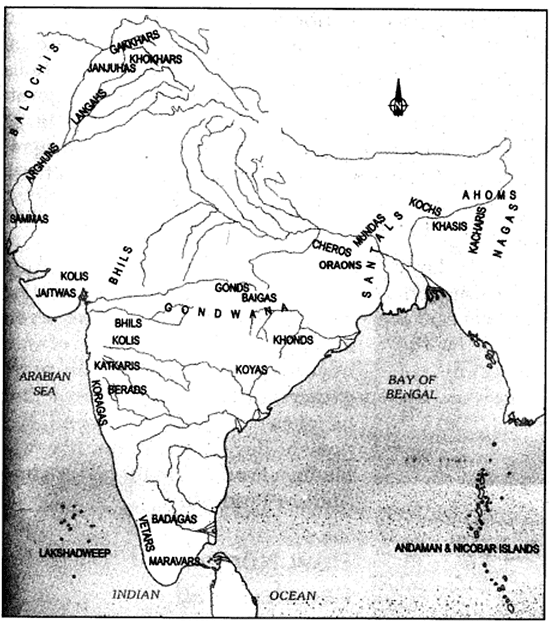
Ans: Several tribes inhabit various regions of India, as illustrated on the map below. These tribal communities established temporary settlements based on their specific needs and means of sustenance.
- When faced with unfavourable environmental conditions, tribes often migrated to areas that better suited their lifestyles.
- This nomadic or semi-nomadic lifestyle reflects a dynamic relationship with the environment.
- Such adaptability allows tribes to seek more favourable conditions for their livelihoods.
Q11. Find out about present-day government policies towards tribal populations and organize a discussion about these.
Ans: Policies regarding tribal populations focus on various aspects aimed at improving their overall well-being. Key areas include:
- Overall upliftment: Initiatives to enhance living standards.
- Land rights: Ensuring tribes have ownership and access to their ancestral lands.
- Education: Promoting access to quality education for tribal communities.
- Cultural and social upliftment: Supporting the preservation of tribal cultures and traditions.
- Infrastructure: Development of roads, water supply, and industries in tribal areas.
Q12. Find out more about present-day nomadic pastoral groups in the subcontinent. What animals do they keep? Which are the areas frequented by these groups?
Ans: Currently, there are several groups of nomadic pastoralists in the Indian subcontinent. Notable examples include:
- Gaddi shepherds in the western Himalayas
- Gujjar Bakarwals in Jammu & Kashmir
- Banjaras in Rajasthan
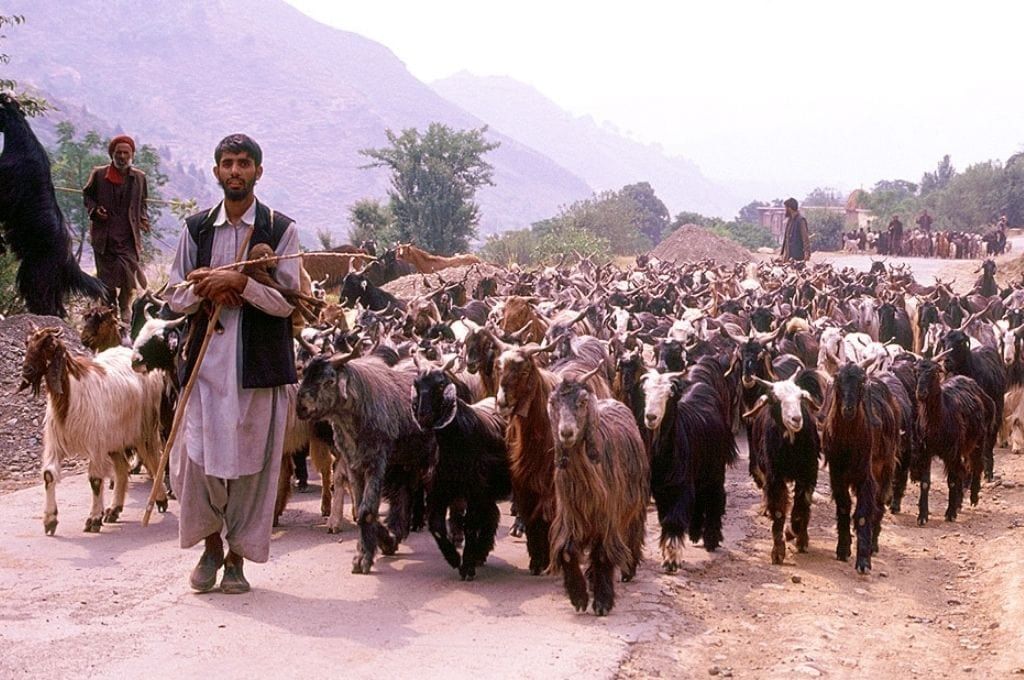
These communities primarily rear:
- Sheep
- Goats
- Camels
They often travel to regions such as: Kumaon in Uttarakhand, Jammu & Kashmir, Rajasthan
FAQs on NCERT Solutions: Tribes, Nomads and Settled Communities
| 1. What's the difference between tribes, nomads, and settled communities in ancient India? |  |
| 2. How did the Pahariya people live, and why did they depend on forests? | |
| 3. Why did some nomadic pastoralist communities in CBSE Class 7 SST stop moving around? | |
| 4. What were the main differences between the Ahom kingdom's settled agriculture and tribal shifting cultivation practices? | |
| 5. How did interactions between settled kingdoms and nomadic tribes shape medieval Indian society? | |